
Professional Oven Care / Tooting
Oven Cleaning Tooting
Clean the deposits. Understand the existing wear.
An oven does not have to be new to deserve careful cleaning. Older enamel, a faded dial or a loose fitting simply needs to be recognised before the work is agreed. For a Tooting enquiry, tell Professional Oven Care about both the build-up and any known damage. The team can discuss the appropriate scope, quote and access, with availability confirmed for your postcode. This guide helps separate removable residue from condition that needs a different response.
Existing damage discussed first
Suitable parts assessed individually
Clear cleaning and repair boundaries
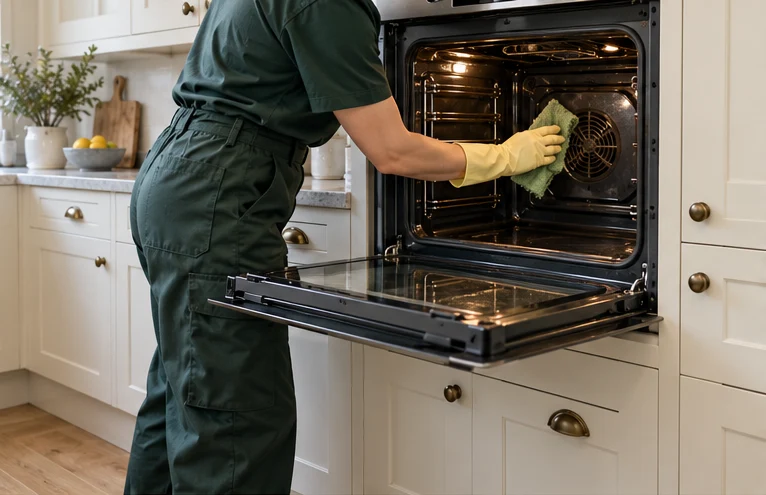
Begin with an honest condition check
Describe what has changed and what has always been there.
When the oven is cold, look at the cavity, door and supports without forcing anything loose. Note which marks appeared after a recent spill and which have been present for years. That history helps explain the concern, although an inspection is still needed to distinguish food residue, staining and damage to the surface.
Mention a door that no longer closes normally, a loose handle or a control with faded markings. These details should not be hidden by a quick polish before the appointment. If you are booking for a relative or a property you do not use yourself, ask the regular user what they have noticed about the appliance.
The main oven cleaning London guide describes the broader service. A Tooting enquiry adds the actual model, condition and access arrangements. Give the full postcode so the address and appointment availability can be checked; general London coverage does not confirm every booking request.
Appropriate treatment for existing surfaces
More force is not always a better answer.
Suitable removable shelves, supports and trays may be treated separately, with dip-tank cleaning used where appropriate. The cavity and accessible glass need methods suited to their materials. A damaged coating or specialist liner can limit what is sensible, even if the remaining deposit appears stubborn.
Explain previous DIY treatment, including any abrasive tool or strong cleaner used on the affected patch. Avoid applying a fresh product immediately before arrival. The technician should be able to inspect the surface and understand its history rather than working through an unidentified treatment that conceals the underlying condition.
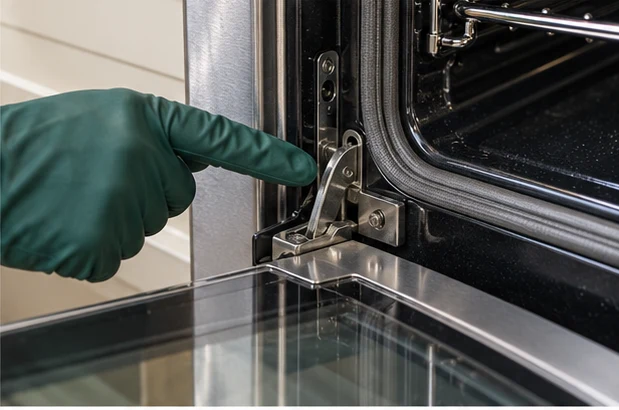
Door glass and fittings should be assessed together. Trapped residue does not automatically justify dismantling a door with damaged clips or a loose hinge. Ask what is safely accessible on the model, and leave the parts assembled for the inspection. Cleaning can improve a suitable surface without making a worn component equivalent to a replacement.
Spend the enquiry on the right work
Prioritise the appliance before adding extras.
List the oven compartments and the accessories that matter most to you. Include the grill if it needs attention, and identify any coated pan or moving runner separately. Ask for the complete scope and quote, then decide whether optional hob or extractor work fits the request rather than assuming it is already included.
A heating fault or broken fitting belongs in a separate oven repair discussion. Explain the symptom before a cleaning appointment is agreed. This avoids paying attention to residue while leaving an unreported problem that prevents normal use or changes what can appropriately be handled.
For surrounding room surfaces, consider deep kitchen cleaning and distinguish its basic oven element from specialist dismantling and dip-tank work. A clear separation of jobs is useful when prioritising: you can compare what each service proposes rather than comparing prices attached to different amounts of work.
| Condition noticed | Discuss for cleaning | Separate concern to flag |
|---|---|---|
| Dark enamel patch | Whether residue can be treated | Missing or damaged coating |
| Cloudy glass | Accessible deposit removal | Scratches or chipped edges |
| Stiff rack support | Suitable separate cleaning | Bent or broken fitting |
| Poor heating | Cleaning scope only | Fault assessment before booking |
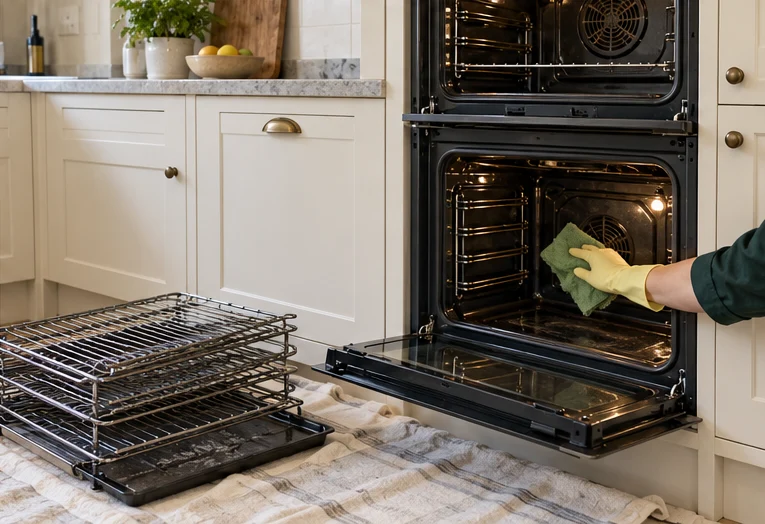
Preparation that preserves the starting point
Leave the fittings for inspection.
Let the entire appliance cool and remove food. Keep any loose but relevant accessory available, and explain if a part has already been removed or replaced. Do not attempt to tighten an unfamiliar hinge or dismantle the door to make cleaning easier. Tell the team what is loose and let the appropriate limits be discussed.
Clear the immediate work area and route into the kitchen. Water and electricity access should be available as agreed during booking. If the oven door cannot open fully because of furniture or another appliance, explain that in advance rather than improvising a new layout when the technician arrives.
Keep the model information ready if possible. If the label is inaccessible, use the manual or a photograph of the controls without moving the cooker from its installation. For an unfamiliar appliance, saying that you do not know the history is better than guessing that a lining, tray or replacement part is standard.
Tooting access and a useful contact
Plan the route to the appliance.
Where Wandsworth rules apply, consult the council visitor parking guidance. Confirm the actual authority, address and signs rather than choosing a permit from the neighbourhood name alone.
Describe the entrance, floor and any shared access procedure. If the booking is for someone who may find it difficult to answer an intercom or phone quickly, agree an alternative contact and entry plan. These arrangements should support the individual household without making assumptions about who lives in the area.
Give the person meeting the technician a short list of the known faults and agreed work. If an owner or manager must approve a change, keep that contact available. Do not activate time-specific arrangements until the visit is confirmed, and avoid treating a general duration estimate as a guarantee for a tightly scheduled handover.
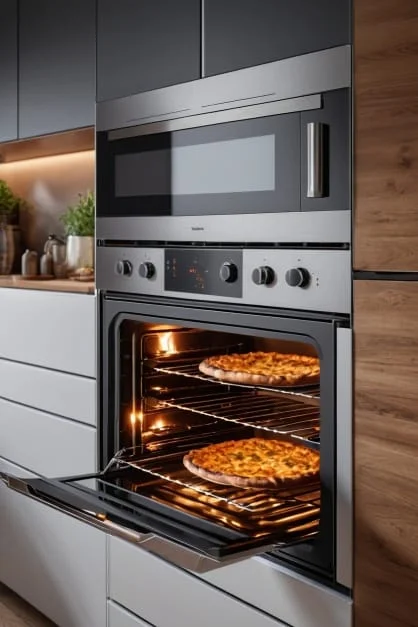
Judge the result fairly
An explanation matters as much as a clearer surface.
At completion, inspect the agreed parts and ask about remaining marks. A scratch, worn enamel and a stain may all remain visible after suitable cleaning. Understanding which is which helps avoid another cycle of aggressive DIY attempts that cannot restore the missing or damaged surface.
Ask how refitted accessories should sit and what instructions apply before first use. Leave a practical buffer for any recommended warm-up. If a previously reported fault still needs attention, keep that separate from the cleaning result; a clearer cavity does not establish that a heating or door problem has been repaired.
Request the complete quote and any exclusions before booking. There is no invented Tooting tariff or promise to make every old appliance look new. The aim is appropriate cleaning of the parts agreed, realistic recognition of existing condition and a handover that leaves you knowing what further care or assessment may be relevant.
Questions before booking
Tooting oven care: the details worth checking.
Is an older oven worth cleaning?
Age alone does not describe the condition. Explain the materials, build-up and any faults so suitable work can be discussed. The important distinction is between removable deposits and wear or damage, rather than expecting every older appliance to achieve the same finish.
Can cleaning repair worn enamel?
No cleaning method replaces a missing coating. Point out the affected area and ask what can appropriately be removed around it. A realistic result may include visible wear even where food deposits have been addressed.
Should I tighten a loose door handle first?
Tell the team about the loose fitting and leave unfamiliar dismantling alone. If you have already removed or adjusted anything, explain what happened and keep the parts together. The original condition matters when deciding what can safely be handled.
What if I do not know the make or age?
Provide a photograph of the controls and the accessible model information if possible. Do not move the installed appliance merely to find a label. Say which details are unknown so the enquiry can be based on observation rather than an invented history.
Can I choose only the most important cleaning tasks?
Describe the priorities and ask what scope is suitable. Compartments, accessories and optional extras should be named in the quote. This allows an informed decision without assuming that every nearby surface or appliance is part of the same service.
Planning a visit at another address?
Explore the surrounding area guides.
For another household, read the guides for Balham, Wimbledon, Streatham. Find the full collection in Areas We Cover. These guides help you prepare an enquiry; availability is confirmed for the full postcode.
Professional Oven Care / Tooting
Ready to discuss your oven?
Call with the model, condition and access details. Confirm the work and complete quote before arranging your appointment.