
A fresh start behind the fridge door
Fridge Cleaning London
Clear the shelves.
Care for the details.
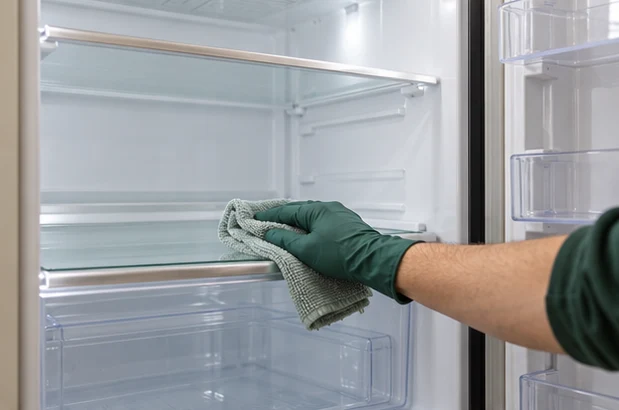
Spills under drawers, residue on shelves and dirt in the door seal are easy to miss during a quick tidy. Plan a separate clean for the interior and suitable removable parts, with practical arrangements for the food first.
The detail behind the service
Make room for
a thorough clean.
Think about where chilled food will be kept during the visit and how you will check that the fridge has returned to the correct temperature afterwards. A clean surface does not make food safe to leave warm.
Tell the team whether you have a fridge, fridge-freezer or separate freezer, and describe ice build-up or a persistent smell. Defrosting requirements vary. Confirm timing and follow the manufacturer’s instructions; do not chip ice away with sharp tools.
Agree the scope
Where the attention goes
| Area | Cleaning focus | Important distinction |
|---|---|---|
| Shelves and trays | Suitable removable parts cleaned separately | Cold glass needs appropriate handling |
| Drawers and cavity | Spills and accessible food residue | Damaged plastic cannot be restored |
| Door seals | Accessible folds and contact surfaces | Split seals need assessment |
| Exterior and refitting | Agreed surfaces and reassembly | Cleaning does not repair cooling faults |

Before we visit
Food storage is part of the plan
The Food Standards Agency recommends keeping a fridge at 5°C or below. Arrange chilled storage before the visit and minimise time out of refrigeration. Follow food labels and official storage guidance.
Hot and cold running water and electricity are needed. Mention integrated units or doors that cannot open fully. If the fridge does not cool properly, describe a fault rather than booking a clean to solve it.
How the visit works
Prepare the food.
Then the appliance.
Plan emptying and defrosting
Confirm preparation with the team. Arrange appropriate chilled storage and follow the appliance instructions for switching off or defrosting. Give notice of heavy ice.
Clean the interior and parts
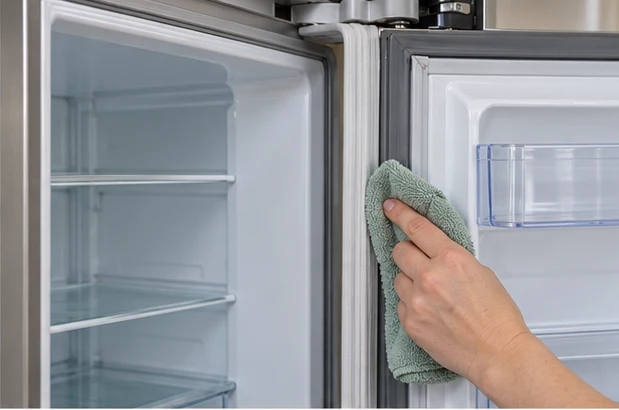
Suitable shelves, trays and drawers are removed for separate cleaning. Accessible interior surfaces and seals are treated using a suitable method, then wiped and dried.
Allow the temperature to recover
Components are refitted and the appliance restarted as appropriate. Use a thermometer and the manufacturer’s guidance before returning food; do not rely only on the dial.
Realistic results
A cleaner interior, not a cooling repair
Cleaning removes accessible spills and residues. Persistent smells may have another cause, and staining or damaged plastic may remain. Leaks, unusual noises and rising temperatures need diagnosis. Confirm a complete quote for your appliance.
Useful answers
Before you book.
Something specific to your appliance or property? Call us to discuss it.
Should I defrost the freezer first?
Discuss the model and ice build-up. Follow the agreed preparation and manufacturer’s instructions; never force ice off with a sharp tool.
Are shelves and drawers removed?
Suitable components can be cleaned separately. Mention cracked glass, damaged runners or parts that are difficult to remove.
When can food go back?
Wait until the fridge has recovered to the appropriate temperature. Follow food and appliance guidance; a thermometer is more useful than guessing.
Will every smell disappear?
Residue causes some odours, but persistent smells may have another source. Explain the problem; cleaning cannot guarantee a cure for a faulty component.
Can I book an oven clean too?
Discuss both appliances so preparation, timing and the full quote can be agreed together.
Professional Oven Care / London
A little planning.
A much fresher fridge.
Tell us the appliance or area, its condition and your postcode. We’ll discuss the scope, preparation and complete quote.
For a combined enquiry, the Romford guide explains coordinating fridge and oven preparation. The Canary Wharf guide discusses integrated-appliance and entry arrangements. Food storage and the scope of each appliance still need separate agreement.