
Professional Oven Care / Hampstead
Oven Cleaning Hampstead
Understand the finish before choosing the treatment.
A self-cleaning label does not tell the whole story of an oven. Shelves, glass and specialist liners can have different care requirements within one appliance. For a Hampstead enquiry, begin with the model and surfaces that concern you. Professional Oven Care’s published London coverage needs confirmation for the address. This guide explains why identifying materials and discussing suitable treatment is more useful than choosing the strongest product or running another programme first.
Identify specialist surfaces
Discuss accessible glass
Protect original fittings
Read the appliance first
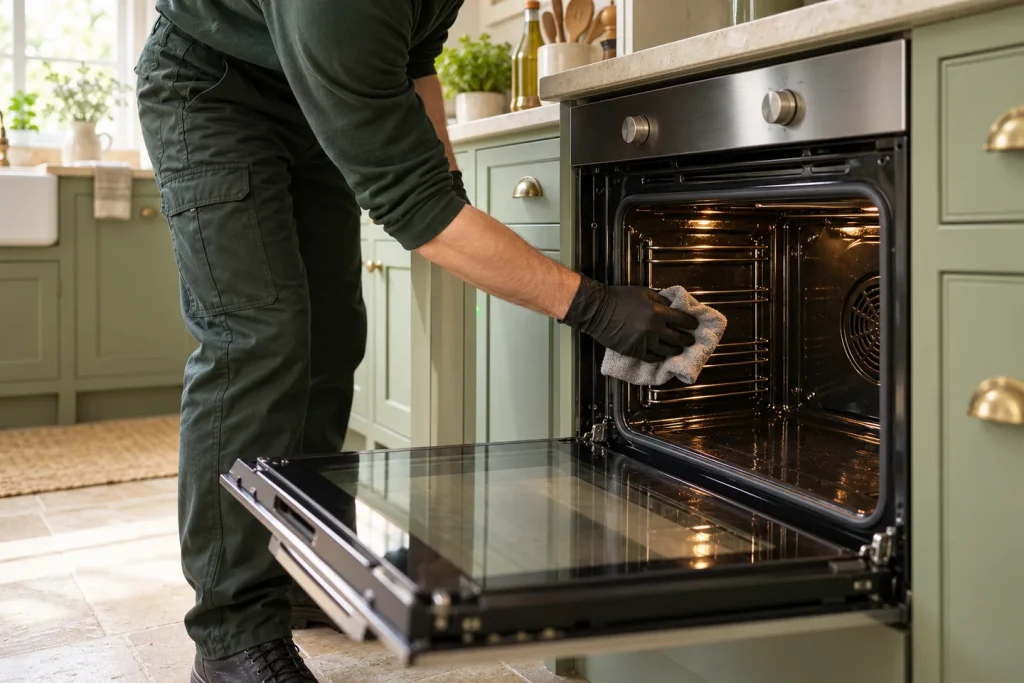
The model matters more than a marketing label
Check the manual for the cleaning system. Pyrolytic programmes, catalytic panels and steam-assisted functions are different arrangements. Tell the team what the manufacturer calls the system and which parts are still giving you difficulty. An uncertain description can be clarified before booking rather than translated into an unsuitable general cleaning instruction.
Look at the door, racks, side panels and floor separately. A specialist lining may coexist with ordinary removable shelves, but that does not make one treatment appropriate for everything. Describe the concern plainly: cloudy glass, a heavy deposit beneath a rack or residue around a support, rather than choosing a chemical method yourself.
Our oven cleaning London page introduces the wider service. For a Hampstead booking, model information helps establish suitability. Avoid running a high-temperature cycle or coating a lining with cleaner just because the appointment is approaching. Discuss preparation for the specific design while the relevant instructions and original accessories are still available.
Respect the materials
Separate suitable soaking from in-place care
Appropriate racks and supports may be treated away from the cavity, including dip-tank degreasing where suitable. Coated or specialist accessories need individual assessment. Keep unusual inserts, sliding runners and trays identifiable so their construction does not get lost among several similar-looking metal pieces from different appliances in the same kitchen.
Accessible enamel and glass can need different tools and treatment. Scratching a stubborn mark can damage the surface beneath it. Tell the technician about earlier scraping and any product used. That information affects the assessment and helps distinguish remaining residue from a change in the actual finish of the material.
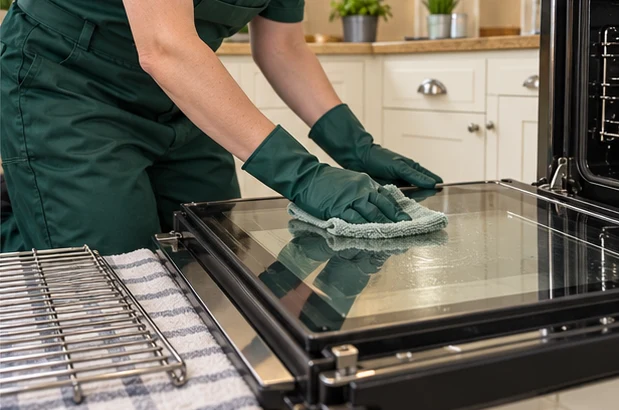
Door panels should only be removed where construction and condition permit. Cracked glass, strained hinges and a loose handle change what can safely be done. Cleaning between panes cannot be promised from a broad description. Leave retaining strips and screws alone so inspection begins with a complete appliance rather than a partly dismantled door.
Choose an appliance scope
Shelves and runners deserve their own questions
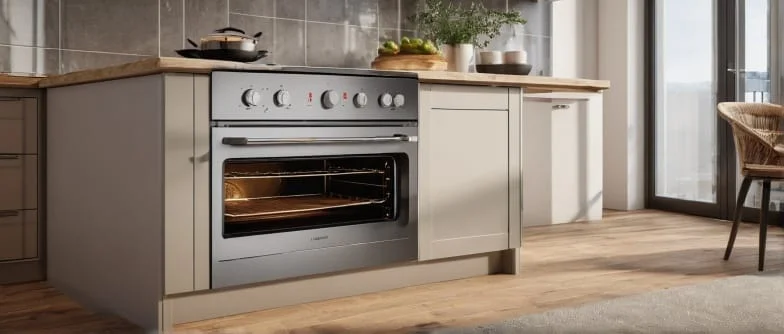
A single oven with telescopic supports may need more explanation than a larger appliance with simple shelves. Mention accessories that slide, clip or lock into place. Check restrictions in the manual and keep it available. The relevant question is not just oven width but which components can appropriately receive treatment.
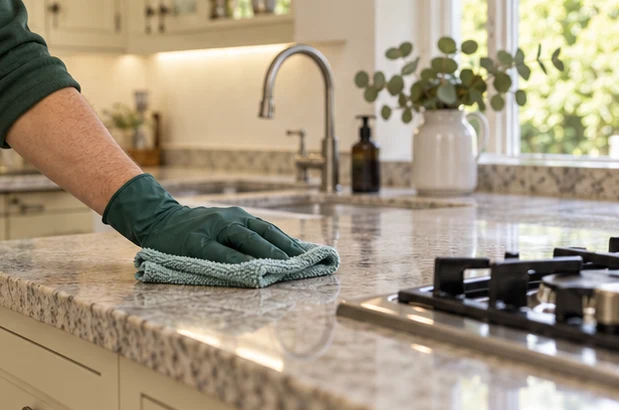
For a hob or extractor, describe material and access as well as size. A glass surface, removable support and coated filter are not all candidates for the same product. Ask that additional work is named in the quotation, and mention any damaged controls or filters that do not come out normally.
If the whole room needs attention, discuss deep kitchen cleaning separately. Specialist oven care should not be confused with an ordinary wipe of kitchen surfaces. A cold appliance can be considered through fridge cleaning, with food storage and removable fittings requiring a different preparation plan from the cooker.
| Component | Cleaning discussion | Important distinction |
|---|---|---|
| Catalytic panel | Identify the specialist lining | Different from bare enamel |
| Shelf | Assess coating and construction | Not every accessory suits soaking |
| Door glass | Check panels and fixings | Some sections remain inaccessible |
| Sliding runner | Discuss model-specific handling | Moving parts need appropriate care |
Prepare without experimenting
Offer information rather than another chemical layer
Keep model details ready for the person meeting the technician. Remove food and personal ovenware, let the appliance cool and clear the space in front of its door. Do not detach panels or pull the oven from cabinetry in an attempt to make the visit quicker; installed access limits should be discussed beforehand.
If a cleaner has already been applied, explain the product and timing. Follow its label and avoid adding another substance over unknown residue. Leave the professional treatment decision to inspection instead of beginning another round of spraying shortly before arrival. Keep the packaging or product name available if you still have it.
Hot water, electricity and a workable route to the kitchen should be available. Explain stairs, restricted door opening and shared access at booking. Move fragile personal possessions from nearby surfaces without concealing damaged parts. Room to handle components matters as much as a clear view through the front of the oven.
Hampstead appointment details
Match parking and entry to the property
For a Camden-administered address, consult Camden Council’s parking permit information. Check the permission and restrictions for the location. The general Hampstead label does not establish which bay a visiting vehicle can use, and a permit suitable elsewhere should not be presumed valid for this visit.
Where a manager or shared entrance controls entry, give those details with the postcode. Confirm the correct bell and whether equipment can be brought directly to the kitchen. Do not rely on an unconfirmed collection arrangement that leaves nobody able to discuss the appliance or approve the work when the team arrives.
Ask for availability for the actual address and scope. London-wide public coverage is not a promise of an office in Hampstead, a particular arrival time or a slot already reserved. Clear information about entry and parking supports an achievable appointment without introducing assurances that have not been confirmed for your home.
Maintain realistic expectations
Cleaning preserves a surface; it does not renew it
Food deposits may be removable while worn enamel or scratched glass remains. Discuss these distinctions during inspection and again at completion. Assess the result against the appliance’s condition and suitable methods, not the expectation that every component should resemble a newly installed oven or the finish shown in an illustrative photograph.
An error code, locking problem or failure of a self-cleaning programme is a separate issue. Explain the symptom and use the oven repair information to discuss the next step. Removing deposits should not be represented as a cure for a door mechanism, electrical fault or damaged temperature control.
Confirm exclusions and the complete quote in advance. At handover, ask how to return this model to use and maintain its particular surfaces. Keep that guidance with the manual, especially where other people cook and might otherwise apply an unsuitable product to a lining that needs a different approach.
Questions before booking
Hampstead oven care: the details worth checking.
Does self-cleaning remove the need for other care?
That depends on the model and affected component. Programmes have specific instructions and accessories may need separate treatment. Describe what remains dirty and consult the manual so the discussion concerns suitable care, not a blanket assumption about the whole appliance.
Can the manual help with booking?
Yes, the make, model and relevant care instructions help identify specialist surfaces. Have those details ready where accessible. Do not pull out a heavy fitted oven just to find a hidden number if that would disturb its connections or cabinetry.
Are telescopic runners always detached?
No. Construction, coating and condition determine appropriate handling. Mention sliding runners and any stiffness or missing parts. Forcing a runner free can damage a fitting, so leave removal to assessment rather than assuming it is routine preparation for every oven.
What about a white mark left by a cleaner?
Explain what was used, where and when, and avoid adding more products. Colour alone cannot distinguish residue from damage. Keep product information available and ask about inspection rather than escalating to scraping or stronger substances on an uncertain finish.
Will an aftermarket liner be refitted?
Identify it separately from original components and check compatibility with the appliance instructions. Ask about it during the appointment. An accessory should not cover a surface or obstruct airflow where the manufacturer says that area must remain clear.
Planning a visit at another address?
Explore the surrounding area guides.
For another household, read the guides for Camden, Highgate, Golders Green. Find the full collection in Areas We Cover. These guides help you prepare an enquiry; availability is confirmed for the full postcode.
Professional Oven Care / Hampstead
Ready to discuss your oven?
Call with the model, condition and access details. Confirm the work and complete quote before arranging your appointment.