
Professional Oven Care / Acton
Oven Cleaning Acton
Understand the marks behind the glass.
Cloudy door glass can make an oven look dirty even when the main concern is concentrated in one place. For an Acton enquiry, explain whether marks are on an accessible surface or appear trapped between panes. Professional Oven Care publishes London-wide coverage, with the actual postcode checked before booking. This guide helps you discuss glass, door fittings and the rest of the appliance without assuming every construction can be dismantled or every visible mark is removable grease.
Describe glass marks clearly
Keep door fittings intact
Include the cavity and racks
Look at the door carefully
Identify the location without dismantling anything
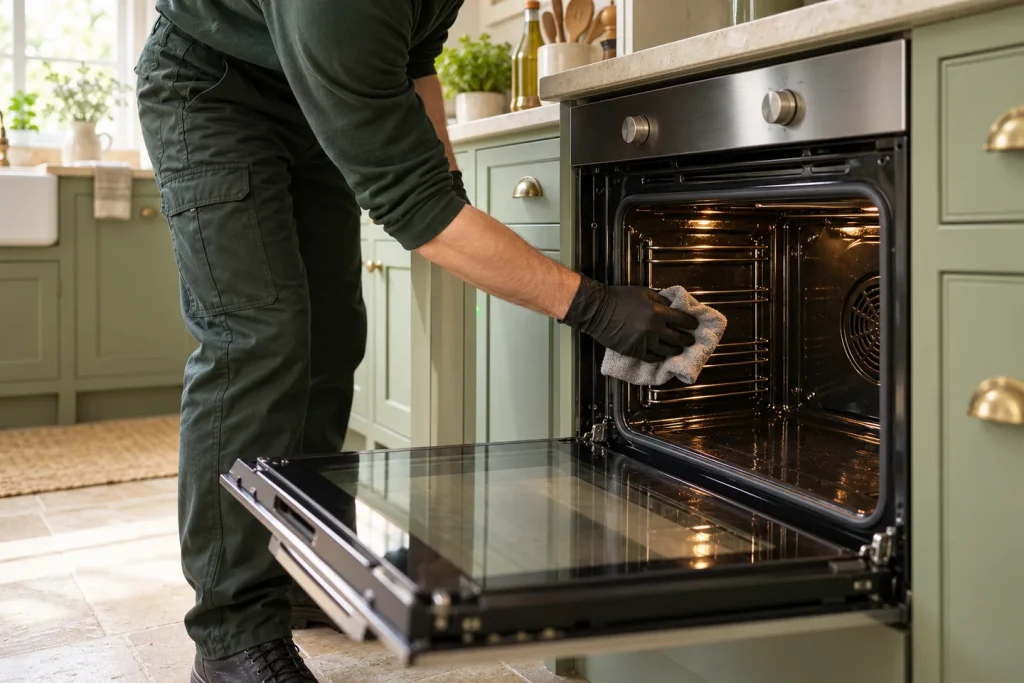
Once the oven is cool, look at the glass from different angles without loosening any parts. Explain whether the mark appears on the inside surface, outside or between panes. A photograph can help communicate the concern, but reflections and lighting do not establish whether a patch is residue, staining or a scratch.
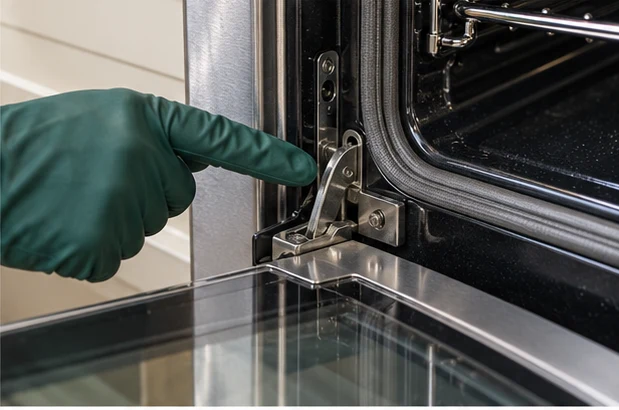
Note the condition of the handle, hinge and visible fixings. A door that drops heavily, catches against a unit or does not close should be mentioned before cleaning is arranged. The mechanical condition can affect what work is appropriate. Do not tighten random screws or remove retaining strips in an attempt to improve access beforehand.
The main oven cleaning London service covers more than the door. For an Acton booking, provide the model, cavity count and postcode as well as the glass concern. Ask about a complete appliance scope instead of treating a clear front pane as proof that every internal surface needs the same method or has the same condition.
Glass and fittings
Access depends on design, not determination
Some doors have accessible removable panels, while other sections may not be suitable for dismantling during the agreed clean. Construction and condition determine the limits. Ask what can be assessed for your model instead of expecting the technician to force access because a mark can be seen through the outer pane.
Accessible glass needs appropriate tools and products. Aggressive scraping can damage a surface and cannot repair an existing scratch. Disclose cleaners already used and any abrasives tried. A useful inspection starts with accurate information, not another freshly applied substance obscuring the distinction between remaining grease and a change to the material itself.
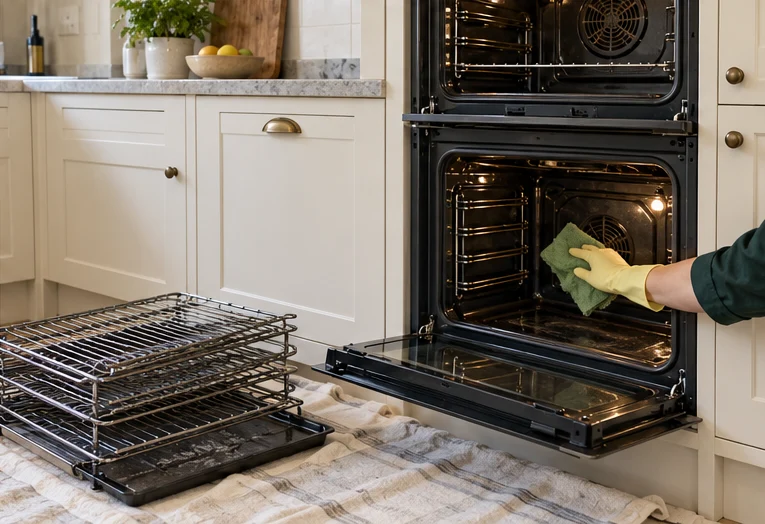
Suitable shelves, supports and trays may receive separate degreasing, including dip-tank treatment where appropriate. Their construction still matters. Coated accessories and unusual liners should be identified before treatment, while exposed elements and fixed surfaces need care suited to the appliance rather than being grouped together with removable plain metal racks.
The complete appliance
Do not let the glass obscure the rest of the scope
Check the cavity floor, side supports and grill pan as well as the visible door. A double oven can have one marked door and a heavily used separate grill behind another. Name the compartments and suitable original accessories wanted so the complete quote reflects the actual work rather than the most noticeable photograph.
Hobs and extractors are additional items to discuss. Explain their finish, fuel and filter construction. They do not become included simply because the technician is already working in the cooking area. A named scope and full price are easier to understand than an assumed package that leaves everyone with a different idea of the work.
For wider surfaces, consider deep kitchen cleaning. If surrounding tile or grout needs attention, see tile and grout cleaning as a separate suitability discussion. Those services should be planned deliberately rather than added to a glass-focused enquiry when the team arrives and the original appointment has already been scheduled.
| What you see | What to discuss | Important limit |
|---|---|---|
| Inner surface grease | Suitable accessible glass cleaning | Check surface and condition |
| Between-pane residue | Model-specific access assessment | Dismantling is conditional |
| Scratched pane | Disclose existing damage | Cleaning does not replace glass |
| Loose door fitting | Raise before booking | May need separate repair |
Before the visit
Offer a complete door and a clear working area
Choose a visit after the oven has cooled, take out food and put your personal cookware elsewhere. Have the original shelves available. Clear the open-door area and nearby clutter so parts can be handled without competing with fragile possessions or a crowded passage. The appliance should remain installed, with the glass and door fittings assembled as they currently belong.
Make hot water and electricity available and mention awkward access at booking. A kitchen upstairs, shared entry or restricted sink is useful information. If somebody else provides entry, give them the model details and concern about the glass so the technician is not met by someone who only knows the arrival date.
If any part has already come away, explain that before the appointment and keep it identifiable. Do not reassemble a door uncertainly or hide a missing fastener. Follow product label guidance for anything already applied and avoid adding another cleaner immediately before arrival. Preparation should improve access and information, not create a new condition problem.
Acton appointment planning
Use address-specific parking information
For an Ealing-managed location, consult Ealing Council’s visitor parking guidance. Check the responsible council and current conditions for your actual street. An Acton area name alone is not sufficient to choose permission or assume the same arrangement applies to another address nearby.
Confirm private access separately, including gates, shared forecourts and any manager who controls entry. A permit is not a reserved bay and an apparently empty private space is not necessarily authorised for the visiting vehicle. Explain the route from parking to the kitchen and who will answer the door on the day.
Ask the team to confirm postcode availability and the planned scope before coordinating time-specific permission. Published London coverage does not establish an Acton office or a guaranteed appointment. Useful local preparation concerns the real address and access arrangements, rather than unrelated landmarks that provide no help in carrying out the agreed clean.
Seeing the result clearly
A cleaner pane can still contain permanent marks
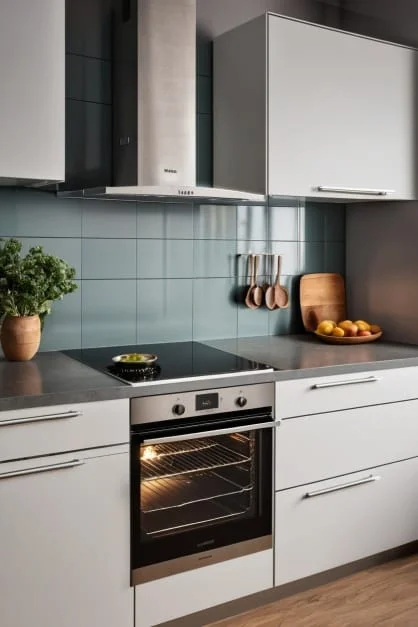
At handover, ask which glass surfaces were treated and whether any section remained inaccessible. Discuss scratches, staining and known damage separately from deposits removed. The outcome should be assessed against appropriate methods and the original condition, not a promise that every pane becomes new or that every door construction allows identical access.
A door that will not close, an unreliable hinge or an operating fault needs a separate conversation. Read oven repair and describe the symptom before booking. Cleaning grease from accessible glass does not strengthen a damaged hinge, repair a lock or certify the appliance’s electrical or gas condition for continued use.
Confirm the complete quote and exclusions in advance. Afterwards ask about reassembly checks, any model-specific warm-up and the return-to-use guidance for the oven. Leave time for that advice before planning a meal. For ongoing care, follow the manual rather than introducing a harsher abrasive simply because one permanent mark remains visible.
Questions before booking
Acton oven care: the details worth checking.
Can all between-pane marks be reached?
No universal promise is appropriate. Door construction, fittings and condition determine safe access. Supply the model and explain the location of the residue. The inspection should establish what can be done without forcing parts or treating every oven door as identical.
Should I remove the glass myself?
Leave the assembly intact. Incorrect removal can damage fixings or create an unstable door. If you have already detached something, disclose it before the visit and keep the parts identifiable rather than attempting an uncertain reassembly to hide the problem.
Does cloudy glass always mean grease?
Not necessarily. Lighting can make residue, staining or scratches appear similar. Describe what you see and any products previously used. An appropriate assessment is more useful than choosing a stronger cleaner based only on the colour of a patch.
Can a clean fix a door that drops heavily?
A hinge or mechanism problem needs assessment separately from cleaning. Mention the symptom before booking. Removing deposits should not be represented as restoring the strength, balance or safe operation of a damaged door fitting.
Is the whole oven included if my main concern is glass?
Agree that explicitly. Identify the cavity, suitable racks and any second compartment or grill. A concern about the door does not by itself establish the rest of the work, so ask for the complete appliance scope and price before deciding.
Planning a visit at another address?
Explore the surrounding area guides.
For another household, read the guides for Ealing, Chiswick, Hammersmith. Find the full collection in Areas We Cover. These guides help you prepare an enquiry; availability is confirmed for the full postcode.
Professional Oven Care / Acton
Ready to discuss your oven?
Call with the model, condition and access details. Confirm the work and complete quote before arranging your appointment.