
The kitchen care journal
What professional oven cleaning may not remove
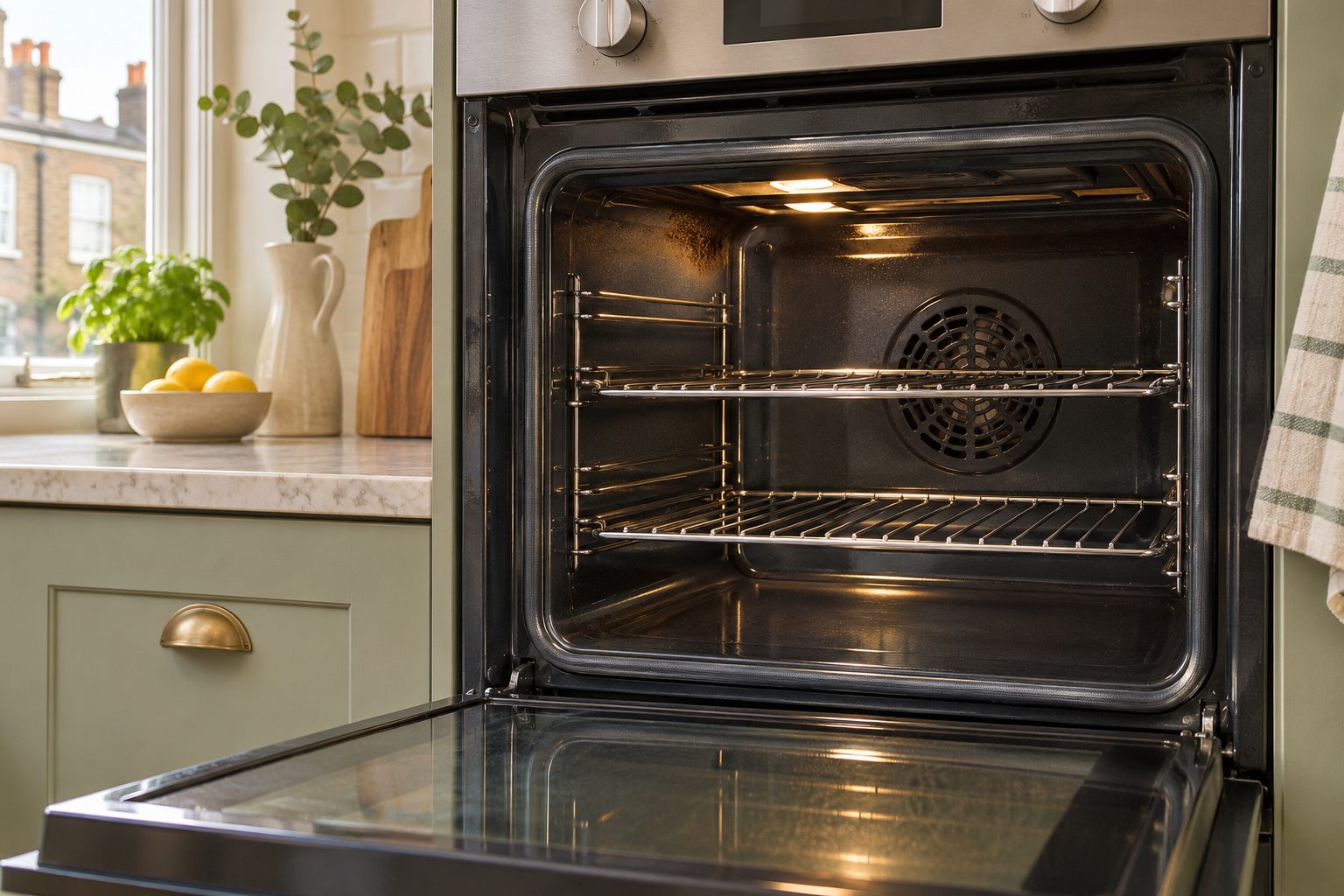
A professional oven clean can make a heavily used cooker easier to inspect and more pleasant to use. It can remove suitable grease and food deposits from accessible surfaces and removable parts. Yet some dark, cloudy or rough patches remain because they are changes in the material rather than material sitting on it. Understanding that difference before booking protects you from an unrealistic promise and helps the cleaner choose an appropriate method for the appliance.
In this guide
Treat enamel and liners according to the model
Look closely at racks and trays
Seals, hinges and controls need separate attention
Begin with the kind of mark
Grease, crumbs and baked-on food are deposits. Scratches, corrosion, worn coatings and chips are changes to the surface. They can look similar from a distance, especially through a dark oven door. A photograph may help a team plan the work, but it cannot always establish which type of mark you have. An inspection may still be needed before anyone can say what will lift.
Describe the location and history rather than diagnosing it yourself. Say whether a mark appeared after one spill, grew gradually or followed an earlier cleaning attempt. Mention any product or tool already used. Those details are more useful than asking for a “like new” finish, which cannot be promised for an appliance with years of wear.
Light can change what a surface seems to show. A dark cavity hides chips; a bright photograph can make staining look severe. Take one picture of the whole appliance and another of the concern, without trying to disguise it. Include the door open and closed if access to the glass is the issue. The images should start a conversation, not replace an in-person assessment.
Know the limits of oven glass
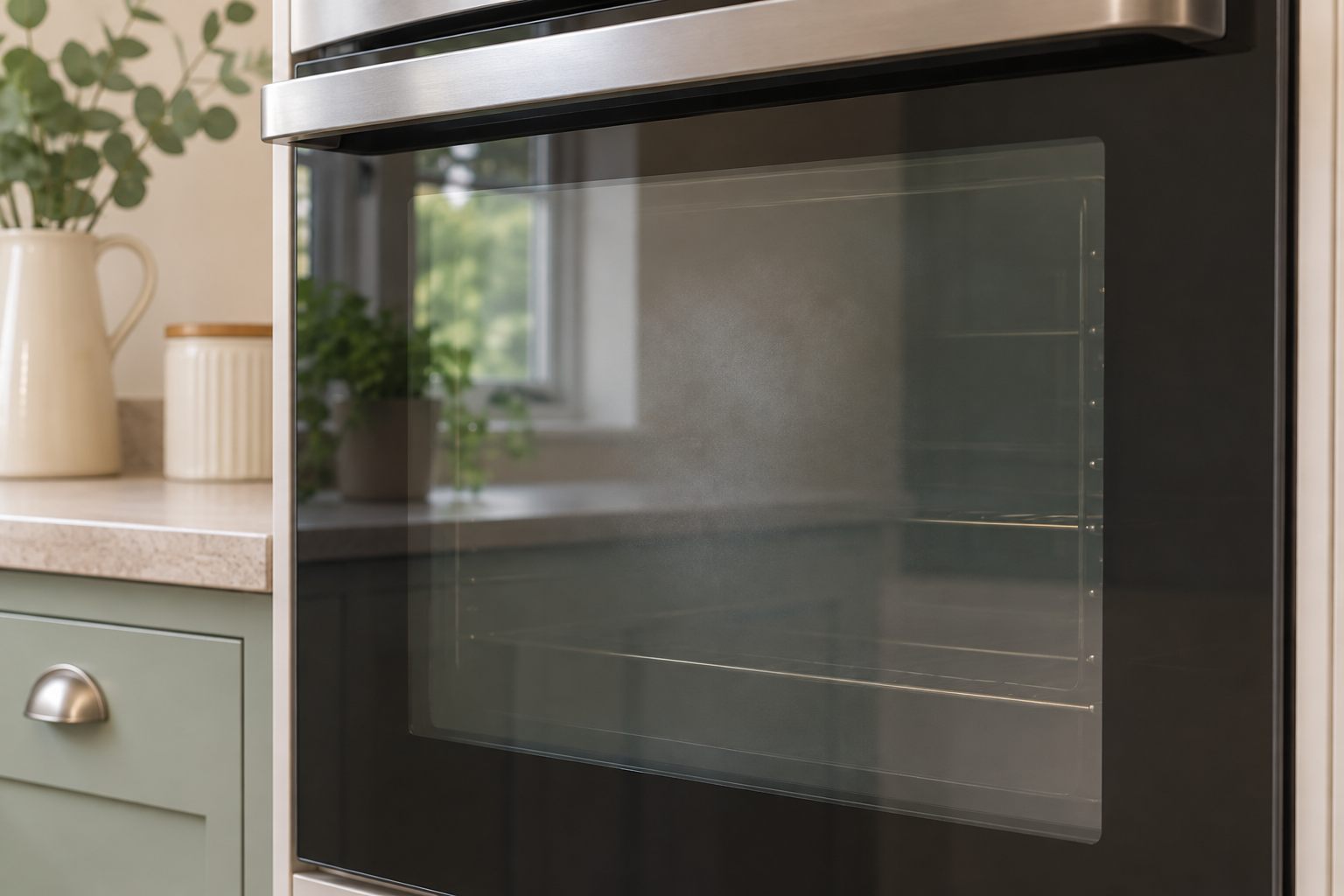
Accessible film and cooking grease can make glass look dull. If the mark is on a surface that can be reached safely and cleaned by a method suitable for the model, it may improve. Marks between panes are different: the design of the door determines whether internal access is possible and whether disassembly is appropriate. The cleaner should not promise to open every door based only on a photograph.
Scratches, etching and damage to coatings cannot be washed away. Repeated pressure or an unsuitable blade may make the appearance worse. If glass remains cloudy after suitable residue has been removed, ask whether the remaining change is in the glass itself or behind an inaccessible panel. That answer is more helpful than repeating the same clean.
Treat enamel and liners according to the model
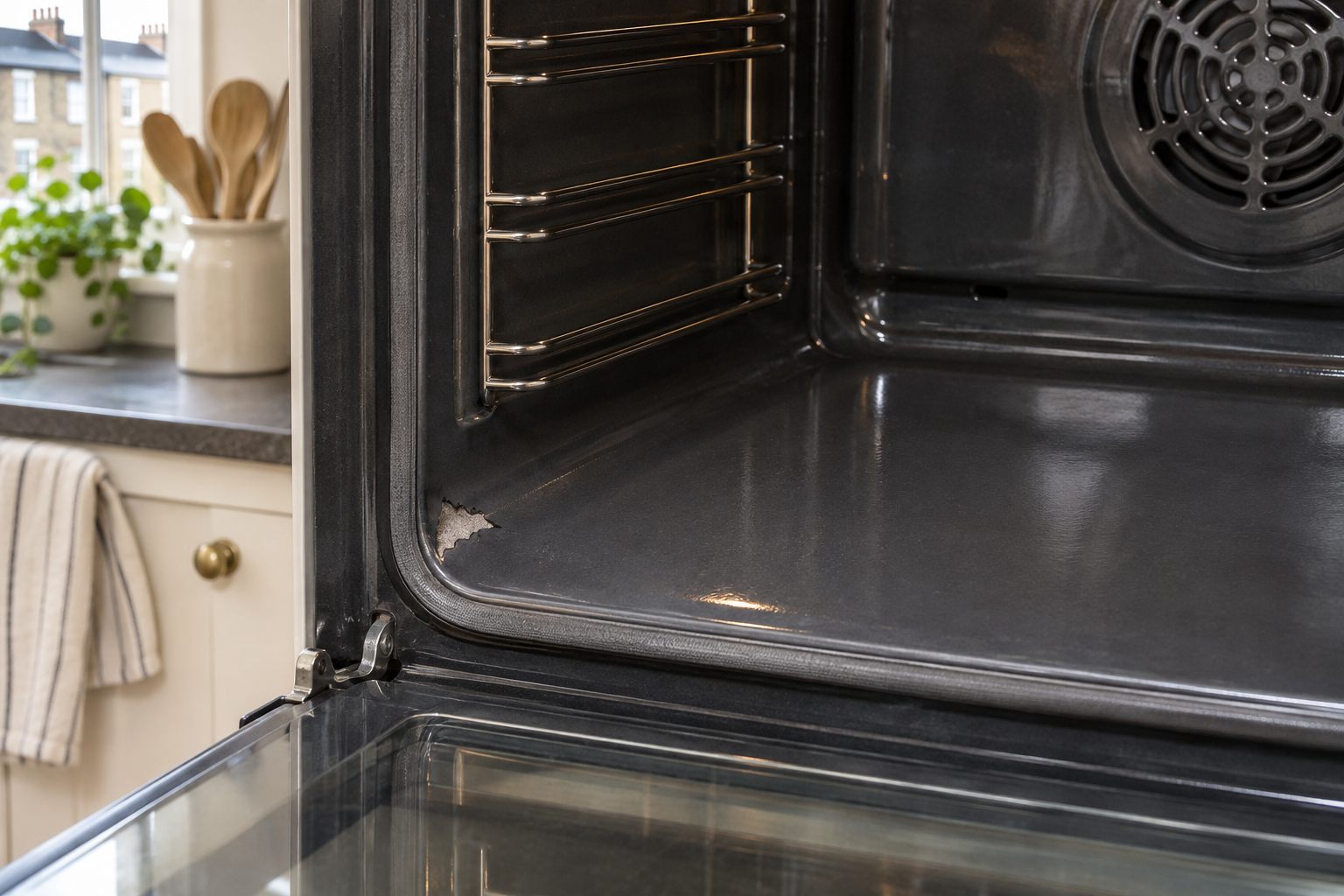
An oven cavity may contain enamel, catalytic panels or another specialist finish. Burnt food on an approved surface is a different problem from chipped enamel or a worn liner. Cleaning can remove appropriate deposits, but it does not replace a coating. A dark patch that remains after cleaning may be permanent staining or damage rather than evidence that the job was unfinished.
Keep the make and model available and follow the manufacturer’s care instructions. Do not use an abrasive pad or strong mixture simply because a stubborn patch is visible. If a liner is loose, crumbling or visibly damaged, mention it before the visit. The team can then explain what cleaning can safely cover and whether the part needs separate assessment.
Look closely at racks and trays
Removable racks and trays often show the clearest difference after a clean, but they also accumulate wear. Grease can be removed from suitable parts; rust, a flaking coating or a warped tray cannot be reversed by washing. A tray may remain discoloured even when food residue has gone. That does not automatically mean the cleaning method failed.
Tell the cleaner which accessories belong to the cooker and which ones you want included. Some coated parts need different care from plain metal racks. If a component is damaged or its coating is peeling, ask whether it should be cleaned, replaced or left alone. A clear decision protects the part and avoids confusing cleaning with repair.
Seals, hinges and controls need separate attention
Grease can settle around a door edge or control panel, but not every nearby defect is dirt. A torn seal, loose hinge, cracked knob or failing display is a condition issue. Cleaning may expose it more clearly; it will not restore the component. Do not ask a cleaner to force a door apart or pour liquid into controls to chase a mark.
If the oven does not close, heat or operate as expected, describe that before booking. The team may advise that an assessment or oven repair is the next step. Keep the cleaning enquiry separate from a fault report so the right person and scope can be arranged.
Agree what a good result means
Ask for a practical description of the work: which cavities, accessible glass, racks and trays are included, and whether a hob or extractor is an add-on. Point out known scratches, chips, corrosion and previous product damage. A team can then discuss likely improvements and limits without treating every mark as a promise to remove it.
After the visit, compare the result with that agreed scope. Look for remaining deposits in areas the team said it could access, and ask about marks that appear to be permanent. Listen to the explanation before deciding whether another pass is appropriate. The condition of a surface and the effort put into cleaning it are separate facts.
It helps to keep the quote and a list of known defects. If you and the cleaner can point to the same item, you can discuss it precisely: grease left on an accessible rack, for example, is a different concern from an old stain in the cavity.
Avoid chasing an impossible finish
When a cooker has been used for years, a sensible result may be a clean cavity and usable removable parts with some old discolouration still visible. Trying ever stronger products on a damaged finish can create a new problem. If a remaining mark matters to you, ask whether a replacement part or specialist repair is available for that model.
For professional oven cleaning in London, share photographs and the appliance details before the visit, then confirm the complete quote. The goal is a clear account of what can be cleaned and what is likely to remain. You should leave the conversation knowing which marks are deposits, which are signs of wear and which need a different kind of help.