
The kitchen care journal
Single or double oven: how to describe the job accurately
A built-in oven can be surprisingly difficult to describe over the phone. One wide door may hide a simple single cavity, while two doors may lead to an oven and a smaller grill compartment. The label on a kitchen plan is not always the most useful description of the cleaning job. What matters is the number of spaces that collect cooking residue, the parts that can be reached and the condition of each one. Taking five minutes to look carefully can make the first conversation much clearer.
In this guide
Count doors, then count cooking spaces
Find the model without moving the appliance
Describe each cavity separately
Count doors, then count cooking spaces
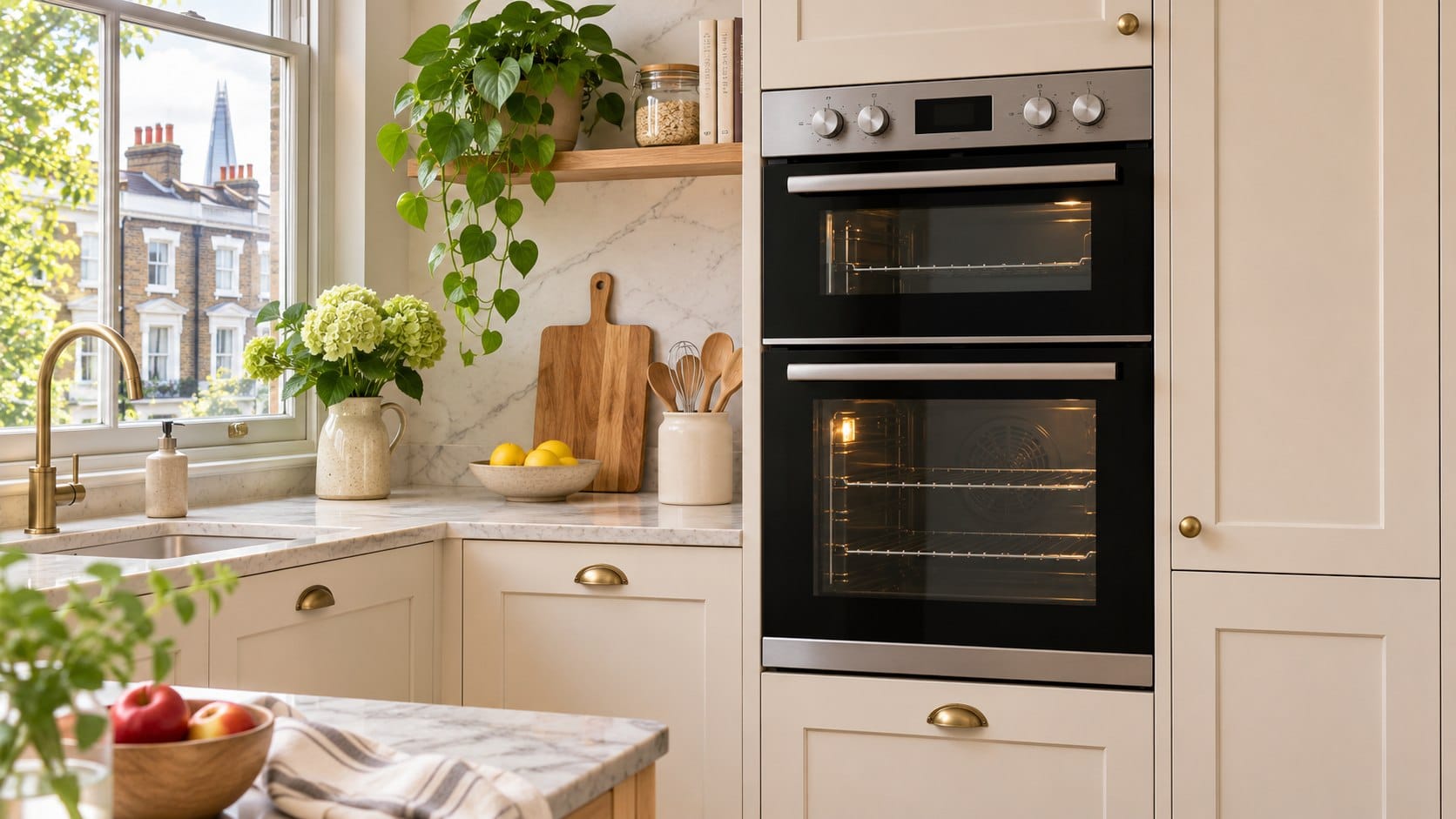
Start with the doors you open to cook. A single oven normally has one main cooking cavity. A double oven has two separate cavities, although the smaller space may be used chiefly as a grill. Some appliances have a combined grill within the main oven rather than a separate compartment. Describe what is actually behind each door rather than relying on the product name printed on an old receipt.
Look at the opening and the controls for each space. If the smaller compartment has its own racks, tray or heating elements, it needs to be considered in the quote even when you rarely use it. An unused grill can still hold splashes from an earlier owner or years of occasional toast. Conversely, a separate storage drawer is not another oven. If you cannot tell what a compartment is for, the model number or manual can settle the question.
Find the model without moving the appliance
The make may be visible on the front, but model details can be less obvious. Check paperwork, a purchase email or the location of the identification plate shown in the manual. You should not need to pull a fitted oven out of its housing. If the plate is hidden or difficult to read, take a photograph of the front and share the details you can find. The cleaner can discuss uncertain points with you before confirming the scope.
Model information helps with more than naming the appliance. Door glass construction, side rails and specialist liners differ between manufacturers. A familiar-looking oven may contain components that should be handled according to its own care guidance. If you know that it has a self-cleaning programme or coated interior panels, say so. That detail helps the team avoid treating every interior as an ordinary enamel cavity.
Describe each cavity separately
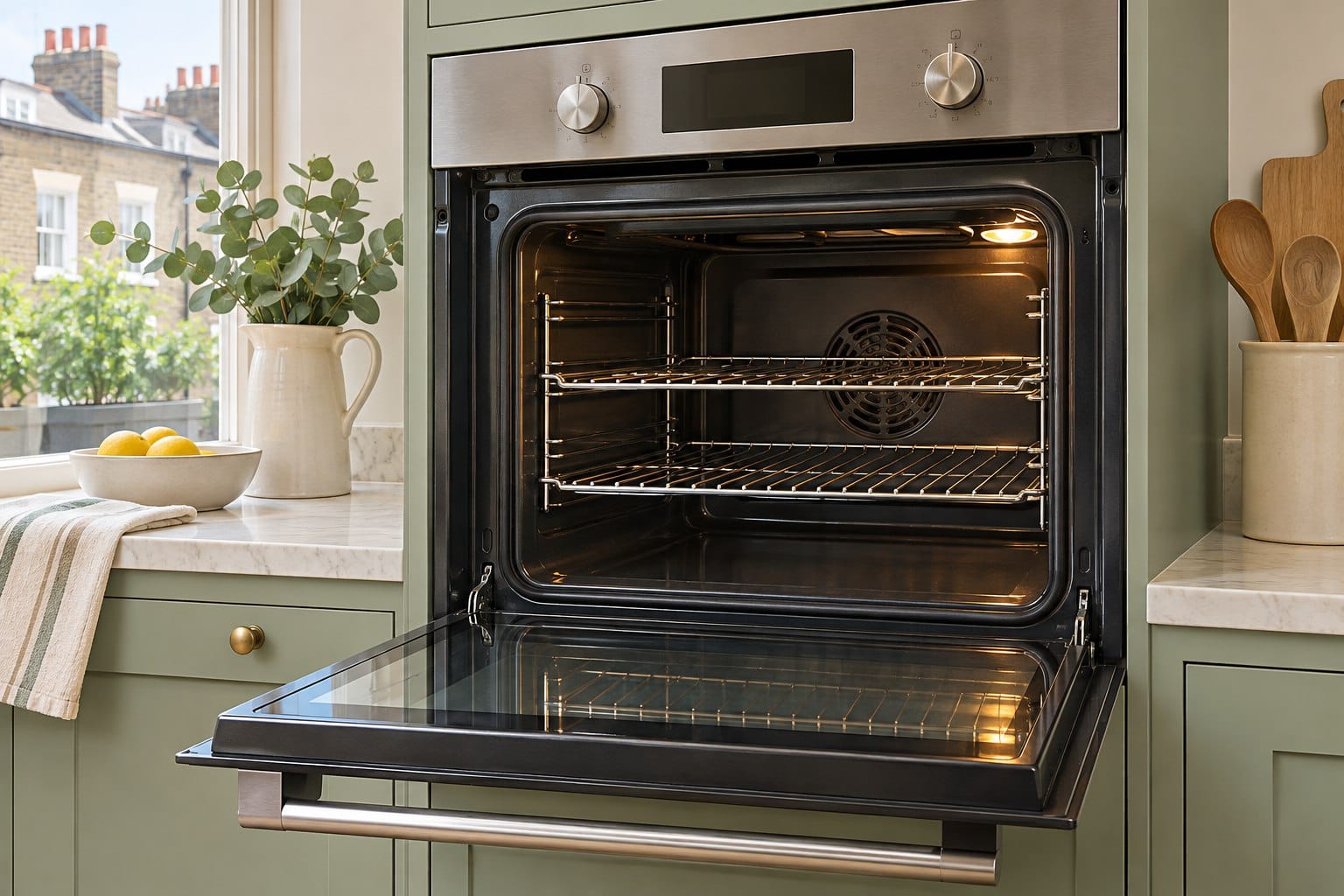
Give a short account of the main oven and then the second cavity, if there is one. Which is used most often? Where are the heaviest deposits? A roasting oven may have baked-on residue across its floor, while a grill compartment may have grease above the tray. Describing both spaces prevents a quote for the more visible cavity alone when you expected the whole appliance to be cleaned.
You do not need to estimate the thickness of residue or use dramatic language. An overall photograph of each open cavity and a close-up of any stubborn area usually communicate enough. Photograph the cooker only when it is cool and safe to approach. If a light is broken or a fitting appears loose, mention it rather than trying to repair it for the pictures. Cleaning and repair are different kinds of work.
Make a list of loose parts
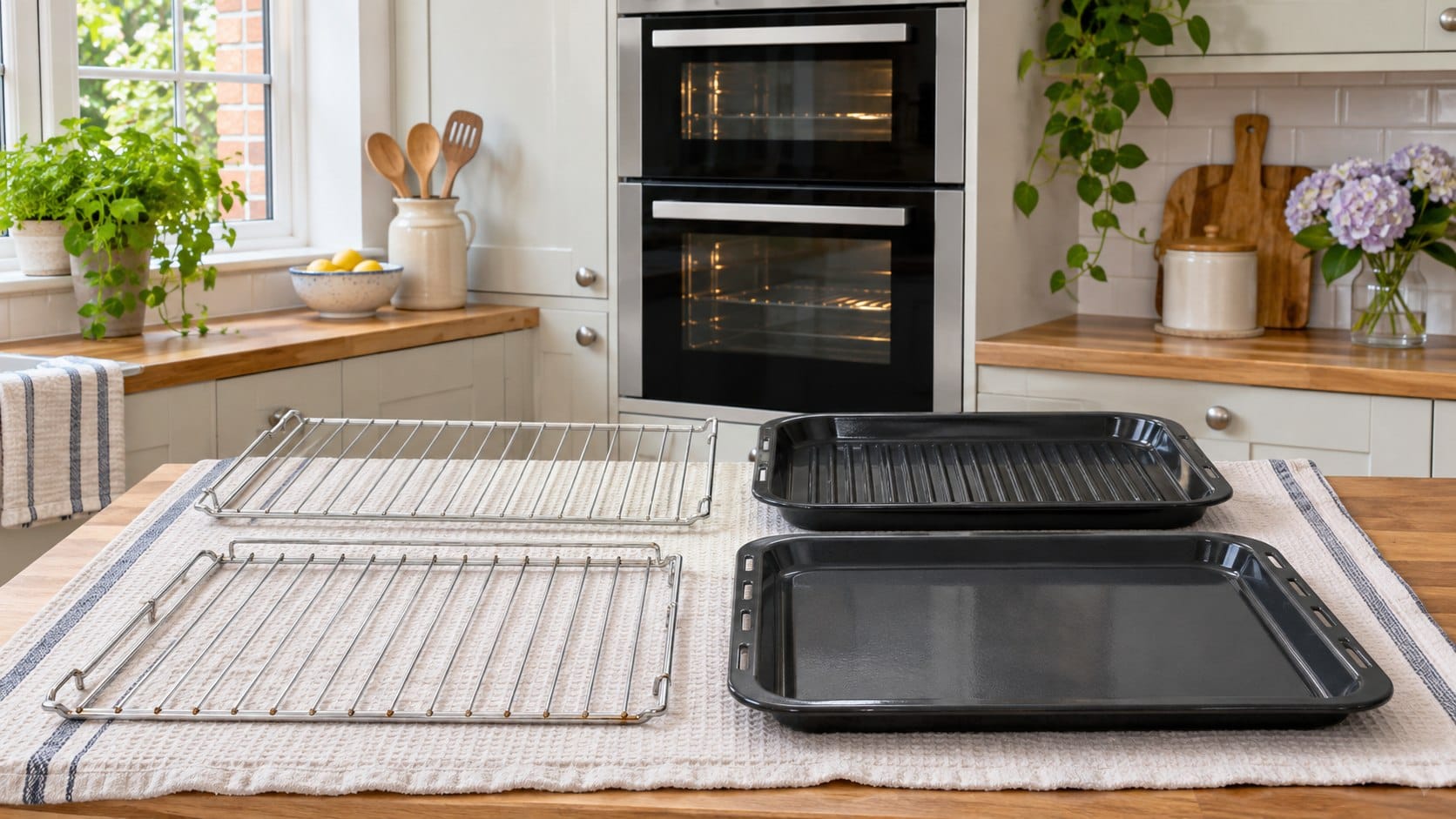
Count the racks, trays and grill pans you expect to be included. Note any side rails, telescopic runners or other fittings that appear removable. The fact that a part looks removable does not mean you should take it off yourself. The team may need to check the maker’s instructions and condition before deciding what can be cleaned separately. A photograph of the accessories laid out in place can help avoid misunderstanding.
If you have extra trays stored elsewhere, decide whether they belong in the appointment. A quote for an oven does not automatically cover every spare baking sheet in the cupboard. Ask which accessories are included and whether additional pieces change the price. This is particularly useful with a double oven, where it is easy to forget that each cavity may have its own shelves.
Ask specifically about the glass
Door glass is one of the first areas people notice after a clean. Explain whether the visible marks are on the room-facing surface, the oven-facing surface or apparently between panes. Internal access depends on the door design and the manufacturer’s guidance. A cleaner may be able to clean accessible surfaces without promising to dismantle every door. Asking before booking is better than assuming that cloudy glass will always become clear.
Also point out chipped edges, a loose handle or a seal that no longer sits properly. Those observations matter when agreeing what cleaning can achieve. A scratch, failed seal or worn finish will not be restored by removing grease. If the oven door does not close or heat as expected, arrange appropriate repair advice separately and tell the cleaning team about the fault.
Turn your description into a clear quote
When you contact a cleaner, bring the details together in one sentence: make and model if known, number of cooking cavities, grill arrangement and the parts you want included. Add your postcode, any parking restrictions and the photographs. Ask for a complete price that accounts for the appliance’s condition and any extras. A starting price is useful for planning, but the final agreement should say what the visit actually covers.
The oven cleaning service from Professional Oven Care shows guide starting prices for single and double ovens. Use those as a conversation opener, then confirm the scope for your particular appliance. Before the appointment, clear nearby worktop items and make the cooker accessible. Leave awkward components in place for the technician to assess. A precise description at the outset gives you a straightforward way to check the result at the end: both agreed cavities, the suitable removable parts and the accessible glass should all have been discussed before anyone starts work.
Keep a copy of the agreed description with your booking details. That record also helps if different people manage the booking. If a photograph shows a tray that you later decide to leave out, tell the team before the visit. Likewise, if you discover a second grill pan or a damaged rail, update them. Small changes are easier to price and plan while the appointment is being arranged.