
The kitchen care journal
Preparing your kitchen for an oven cleaning appointment
An oven cleaning appointment is easier when the technician can reach the appliance and has a place to work. Preparation does not mean taking the cooker apart or making the kitchen look immaculate. It means clearing the immediate area, checking practical access and explaining anything unusual before the visit. A short plan can also prevent a rushed conversation at the door, when everyone is trying to find space for trays, coats and the day’s cooking.

In this guide
Confirm the job before moving anything
Leave fittings for the technician to assess
Confirm the job before moving anything
Start with the booking details. Check which appliance is being cleaned, whether a grill, hob or extractor is included and which removable parts have been discussed. If you have a single or double oven, make sure the number of cavities is clear. For a range cooker, confirm the compartments and any specialist surfaces. Keep the quote or booking message available so you can refer to it when the technician arrives.
If the condition has changed since you booked, tell the team in advance. A spill that has burnt on repeatedly, a loose fitting or newly discovered damage may affect the method or the expected result. You do not need to diagnose the cause. A clear photograph and a short description are enough to start a useful conversation. It is better to raise a question before the appointment than to discover a mismatch about scope halfway through it.
Clear the nearby worktops
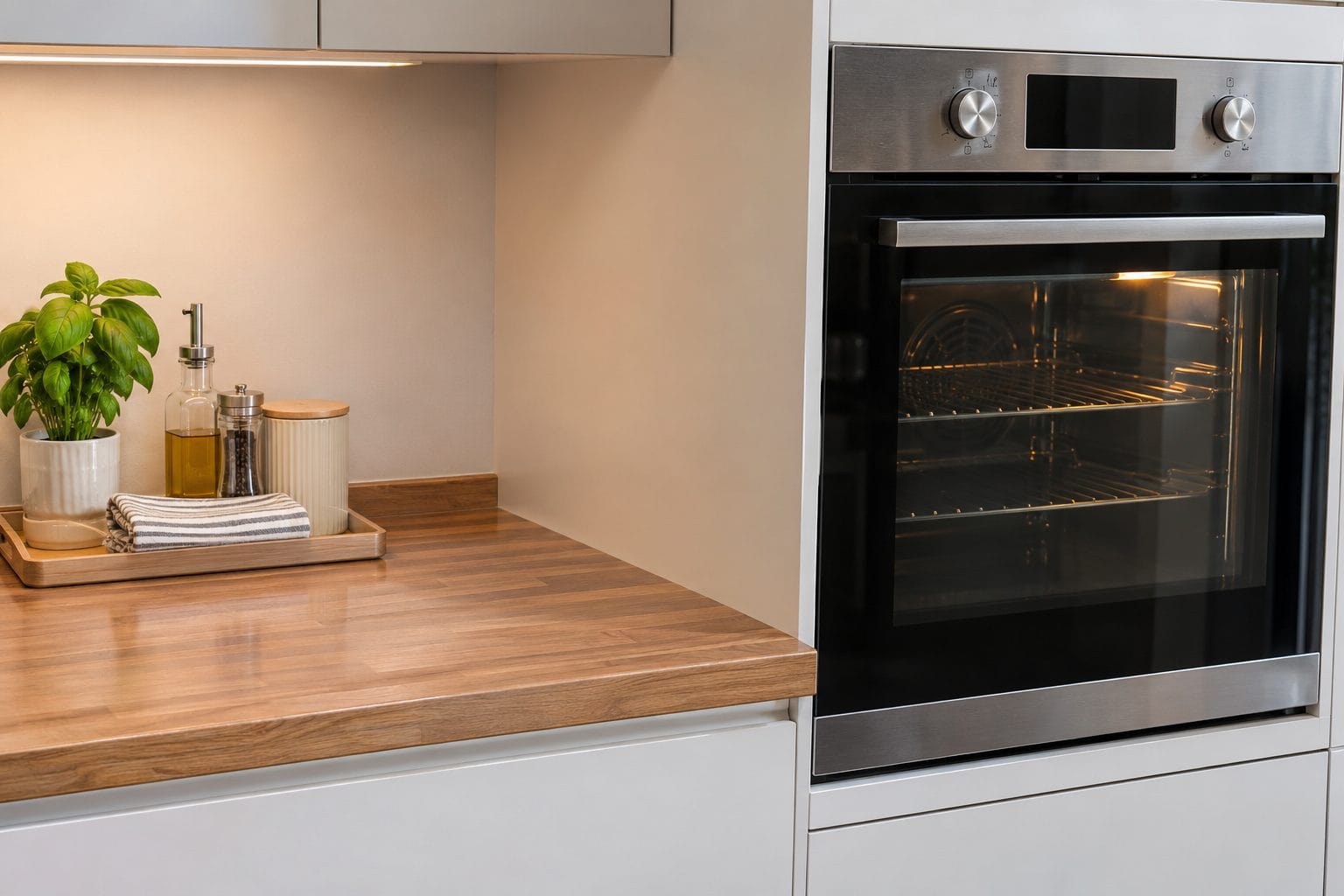
Move small appliances, food containers, utensils and loose papers away from the worktop beside the oven. A clear area helps with protective coverings and gives a place to discuss suitable removable racks and trays. Put fragile ornaments or items that could be knocked over somewhere secure. You need not empty the whole kitchen; focus on the space immediately around the appliance and the route into it.
If the hob is part of the job, remove pans, kettle, chopping boards and anything stored on it. If the extractor is included, clear nearby shelves or objects that make the outside difficult to reach. Ask the team if they need a particular amount of working space, especially in a narrow galley kitchen. A modest adjustment made before arrival can save time without turning the visit into a major rearrangement.
Leave fittings for the technician to assess
You may be tempted to remove shelves, door glass or panels to save time. Leave awkward components in place unless the team has specifically asked you to do otherwise. Whether a part can be removed depends on the model, its condition and the maker’s guidance. A stuck rail or damaged screw is useful information, not an invitation to force it loose. Show the technician the concern when the work begins.
Racks and trays that belong to the appointment should be easy to identify. If you have extras stored in a cupboard, put them together and confirm which are included in the quote. Do not place hot or recently used parts on a worktop. Plan the visit for a time when the cooker can be left unused beforehand, following any preparation advice the cleaning team gives you. If you are uncertain about timing, ask before cooking that day’s meal.
Make access straightforward
Think about the journey from the entrance to the kitchen. Move bags or other loose objects from a narrow hallway and tell the team about stairs, a lift that is out of service or a difficult entrance. If building management requires visitor registration, arrange it ahead of time. These details are particularly useful in flats, where access can take longer than a simple walk from the front door.
Parking needs the same attention. Give the full postcode and mention controlled hours, permits or loading restrictions. Ask whether any parking or travel cost is already part of the agreed price. If a bay needs to be reserved, check how that works before the appointment day. The cleaner can then plan arrival and equipment sensibly instead of searching for a legal space while the booking time passes.

Plan for the household
An oven clean takes place in a working home, not an empty showroom. Decide where children and pets can stay while the kitchen is occupied. If someone needs to prepare food, plan another time or space rather than working around open appliance doors. Let other household members know the oven and nearby worktop will be unavailable during the appointment and until the team says the area is ready for normal use.
If you work from home, think about calls that might clash with the technician’s arrival or questions. You may need a few minutes at the beginning to review the appliance and at the end to check the result. A person who knows what was booked should be available for those conversations. If a neighbour or relative will provide access, give them the booking details and a way to contact you.
Walk through the appliance together
At arrival, point out the areas that concern you most: perhaps cloudy door glass, a grill pan or an older mark on enamel. Also identify existing chips, scratches or loose parts. This is a chance to agree what cleaning is expected to improve and what may remain. A professional cannot repair a worn finish by removing grease, so an honest starting check protects your expectations.
Ask where the technician will work on removable parts and how the surrounding surfaces will be protected. If the proposed scope differs from your booking, settle the price and plan before work begins. Keep the conversation practical and specific. “Both cavities, four racks and the accessible door glass” is easier to verify than “a full clean”, which can mean different things to different people.
Leave time for the final check
Do not schedule your next cooking task for the exact moment the appointment is due to finish. Allow time to see the cleaned areas, check that suitable removable parts are back in place and ask any aftercare questions. The team can explain any marks that remained and any issue noticed during the work. Record advice about specialist surfaces or damaged components so it does not disappear in the day’s routine.
For London households, Professional Oven Care’s oven cleaning service is a starting point for discussing appliance type, guide prices and a suitable visit. Share the postcode, access details and requested add-ons when you book.