
The kitchen care journal
Oven cleaning before moving home: a sensible handover plan
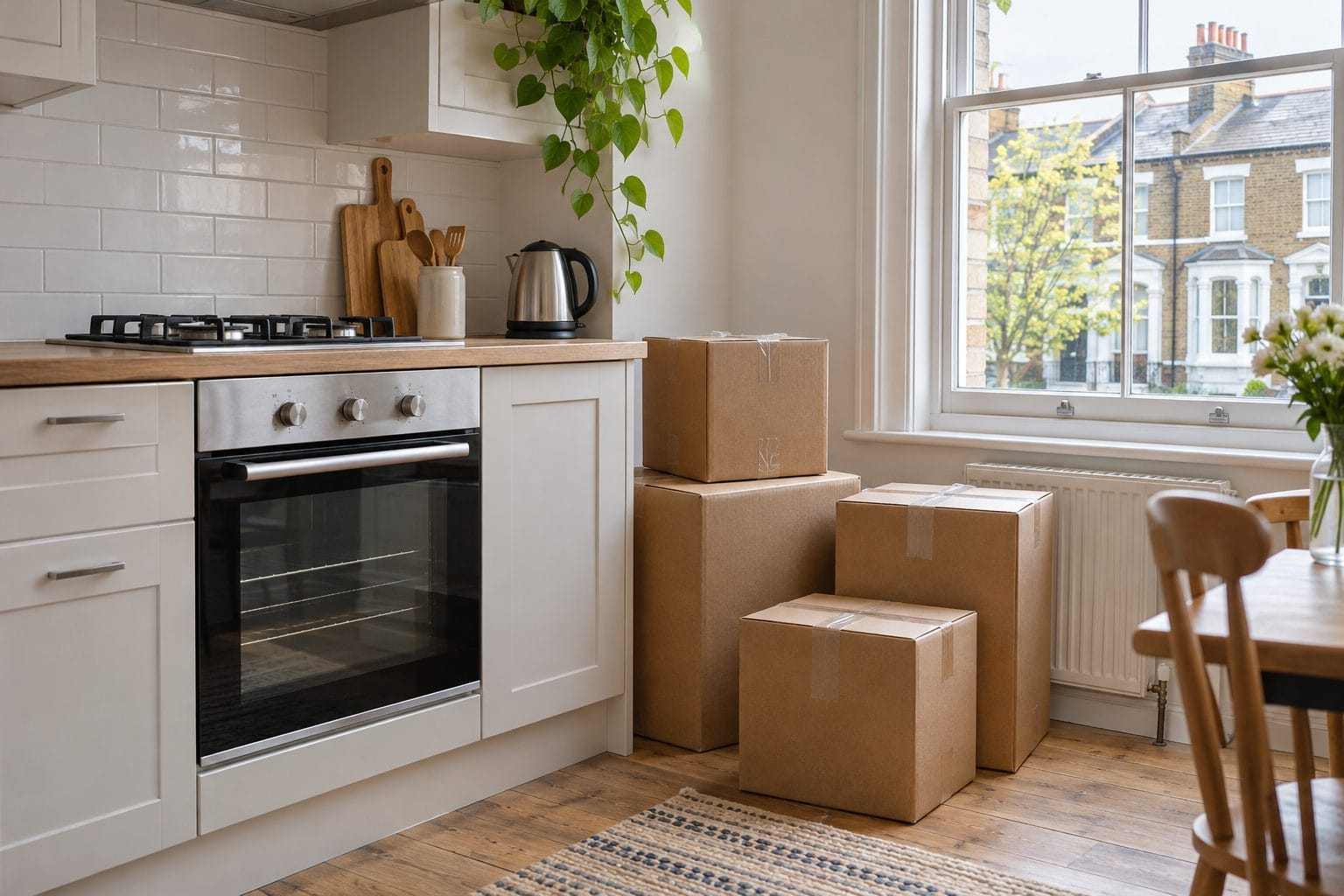
Moving day has a way of compressing every unfinished job into the final afternoon. The oven is easy to miss because the door is closed and the kitchen still looks usable. Then the shelves come out, the light catches the glass, and a task that needed planning becomes a last-minute scramble. Whether you are leaving a rented flat, selling a home or preparing a property for its next occupant, give the oven its own place on the moving checklist.
In this guide
Start with the handover requirement
Choose a date that leaves breathing room
Describe the appliance before asking for a quote
Clear space without dismantling the cooker
Start with the handover requirement
Before buying products or booking a visit, check what you have actually agreed to do. A tenancy agreement, inventory or sales arrangement may describe the expected condition. Compare that description with the oven as it stands today. Look at the cavity, grill, removable racks, trays and door glass. Photograph any existing chips, worn enamel, damaged seals or marks that appear permanent. Photographs help you describe the condition clearly; they do not replace the written agreement.
If the oven was dirty when you arrived, avoid assuming that this settles the matter. Read the check-in record and ask the relevant person how the final condition will be assessed. Keep the conversation factual. The useful question is which surfaces and removable parts need attention, not whether the appliance must look brand new. Cleaning can remove soil, but it cannot restore worn coatings or repair a faulty component.
Choose a date that leaves breathing room
Book the clean after your final substantial cooking session, but before the last day in the property. That gap gives you time to inspect the work, replace anything you need to move and handle an access problem without racing a key deadline. If you plan to use the oven again, be realistic about the chance of another spill. A meal that uses the hob or a takeaway may be easier during the final packing stretch.
Give yourself a simple sequence on paper well ahead: final oven use, appointment, inspection, photographs and key handover. Share it with anyone helping with the move. If your tenancy ends at midday, check whether access really extends through the morning or whether keys must be returned earlier. If the property will be empty, arrange how the technician will enter and who can answer questions about the cooker. Keep a reachable phone nearby. A modest gap between each step is useful because an appointment can take longer than expected when a cooker has several cavities or heavily soiled removable parts.
For a rented home, find out when the inventory check is due. A professional appointment on the same morning leaves little room for delays. If removals are booked, avoid having technicians and movers compete for the kitchen doorway. Ask whether parking, controlled entry, lifts or stairs affect the visit. In a London flat, those details can matter as much as the oven model when arranging a practical time slot.
Describe the appliance before asking for a quote
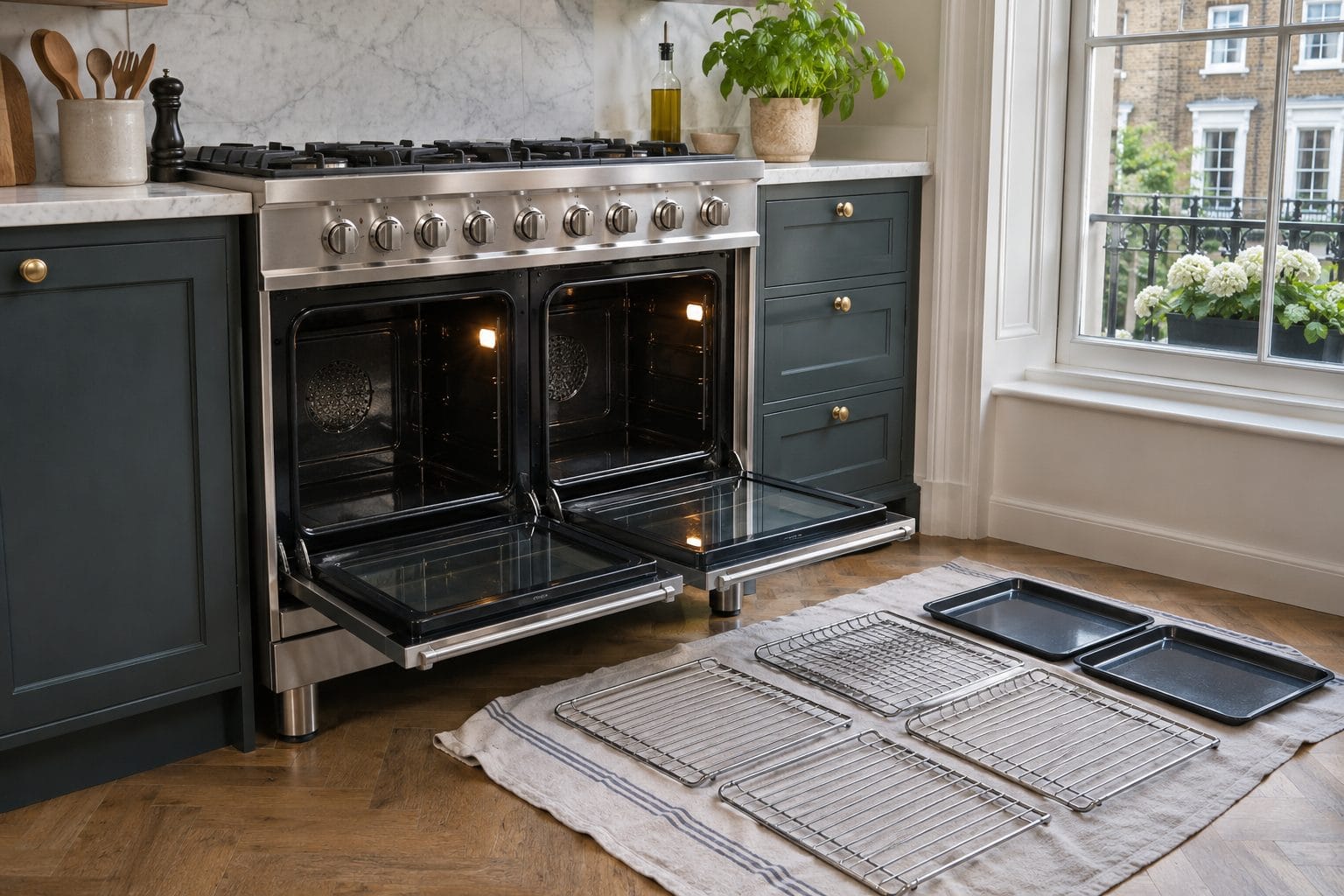
“Oven cleaning” can mean quite different jobs. Tell the team whether yours is a single or double built-in oven, a freestanding cooker or a range. Mention a separate grill, hob or extractor if you expect those to be included. Have the make and model available where possible. Explain whether removable trays and racks are present, and flag heavy deposits, unusual finishes or a self-cleaning programme.
Ask what the quoted price covers and whether parking or travel adds a charge. If the oven door glass has internal panels, ask what access is possible on that model. Do not promise a landlord or buyer that every mark will disappear before a cleaner has assessed it. The oven cleaning service can be discussed alongside the appliance details and your moving timetable, so the scope is clear before the visit.
Clear space without dismantling the cooker
Make the kitchen usable for the appointment. Remove loose packing materials from the floor, clear the immediate work area and leave a route to the appliance. Take personal items off nearby worktops if they would obstruct access. If you need to move a heavy cooker or disconnect it, discuss that with the appropriate qualified person; do not turn a cleaning appointment into an unplanned appliance move.
Put aside any parts you want considered, such as grill pans or spare shelves, and identify which appliance they belong to. Leave the instruction manual if it is available. If a cupboard holds cleaning products, keep them in their original containers and away from the technician’s work area. Tell the cleaner about any surfaces that have been previously damaged or treated. This avoids guessing about a coating when the kitchen is already partly packed.
Check the result while access is easy
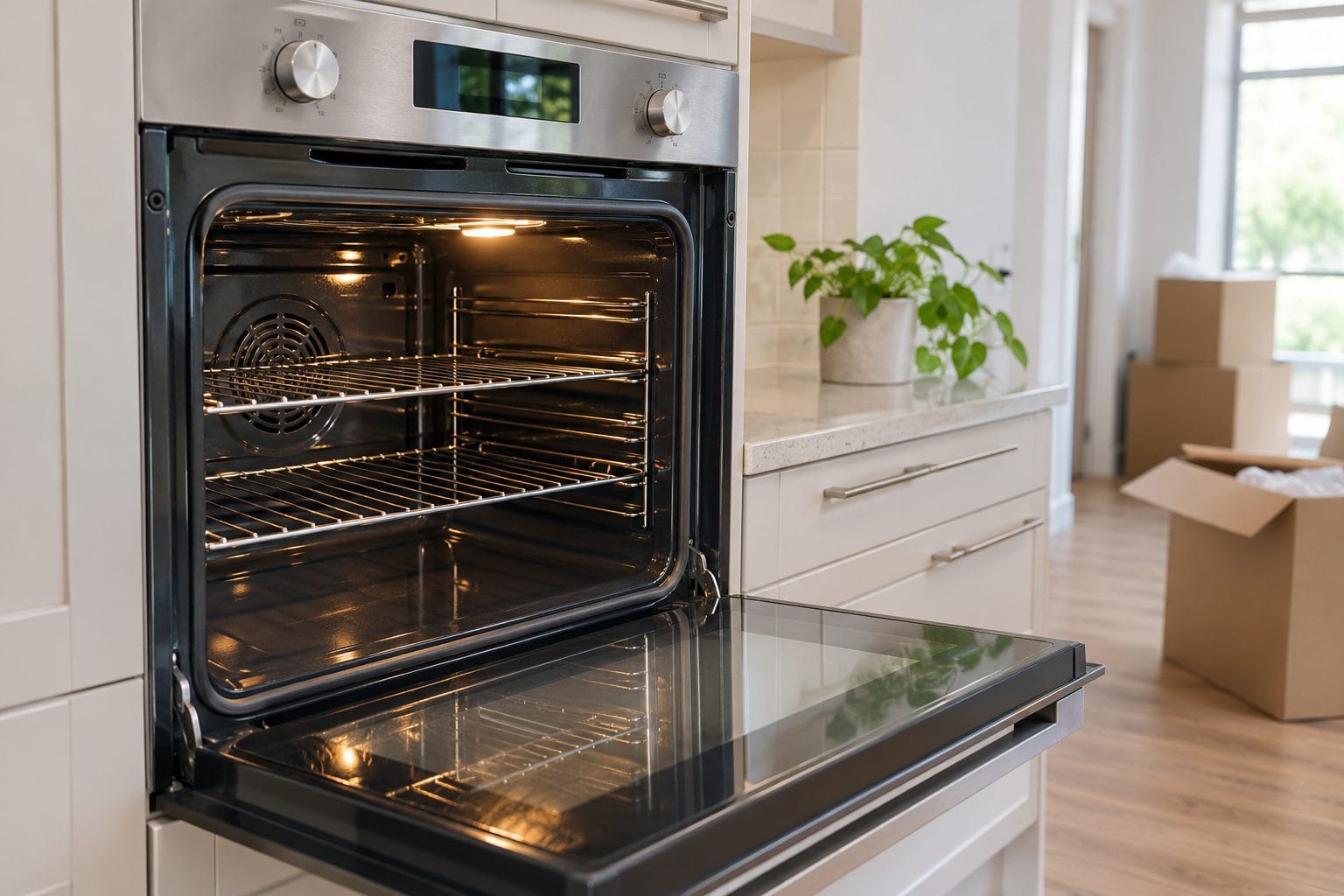
At the end of the visit, look at the areas agreed in the quote. Check the cavity, accessible door glass, racks and trays, and make sure removable pieces have been returned to their correct places. Ask about any residual staining or wear you can still see. A clear explanation now is more useful than trying to reconstruct the condition after everyone has left.
If you are handing the property over, take well-lit photographs once the appliance is dry and the kitchen is tidy. Include a wider view that identifies the oven and closer views of the main surfaces. Keep the invoice or booking confirmation with your moving documents. This records what was done and when, without suggesting that a cleaning company has certified the entire appliance or resolved any mechanical issue.
Keep the final kitchen check proportionate
The oven is only one part of a handover. Wipe accessible worktops, check the hob and extractor if they are part of your agreement, and remove food from the fridge at the right point in the move. If cupboards, floors and appliances need wider attention, a deep kitchen cleaning visit may be more suitable than asking an oven cleaner to take on extra tasks without notice.
Walk through the kitchen with the inventory or your own checklist before closing it up. Note any issue that needs repair separately from the cleaning record. Confirm the key return time, then leave the appliance unused if you want the photographs to reflect its final condition. A little space in the schedule makes the difference: you can inspect the work calmly, answer a question honestly and move on to the next home.