
The kitchen care journal
Why oven door glass still looks cloudy after cleaning
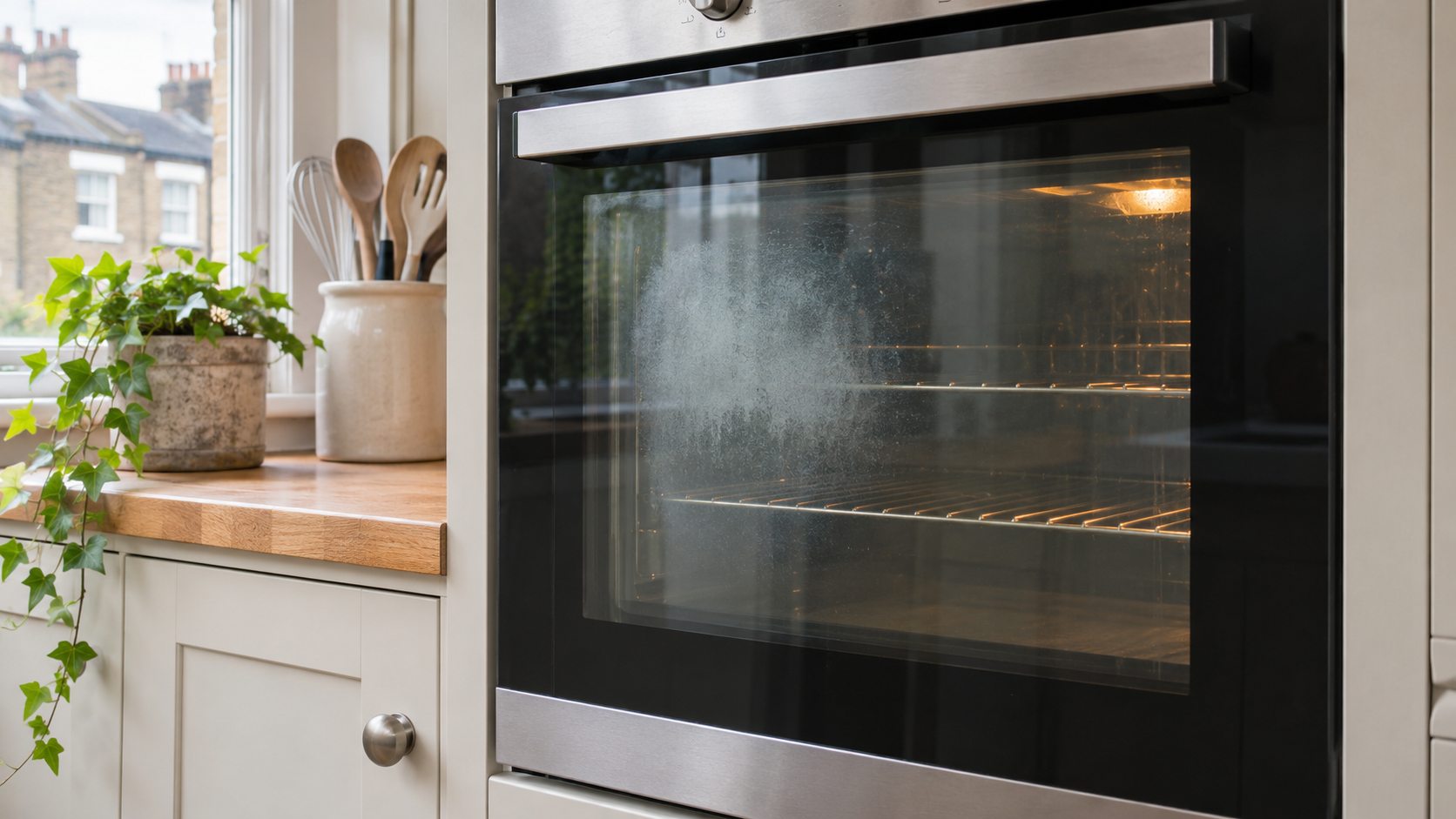
You have had the oven cleaned, yet a pale patch still catches the light when you look through the door. It is tempting to reach for another product, but the word “cloudy” can describe several different things. A thin film on an accessible surface, moisture between panes and permanent damage to the glass need different responses. The first task is to work out where the mark sits and whether it changes. That is more useful than assuming the entire clean has failed.
In this guide
Locate the mark before judging it
Watch whether moisture changes
Consider residue on accessible glass
Locate the mark before judging it
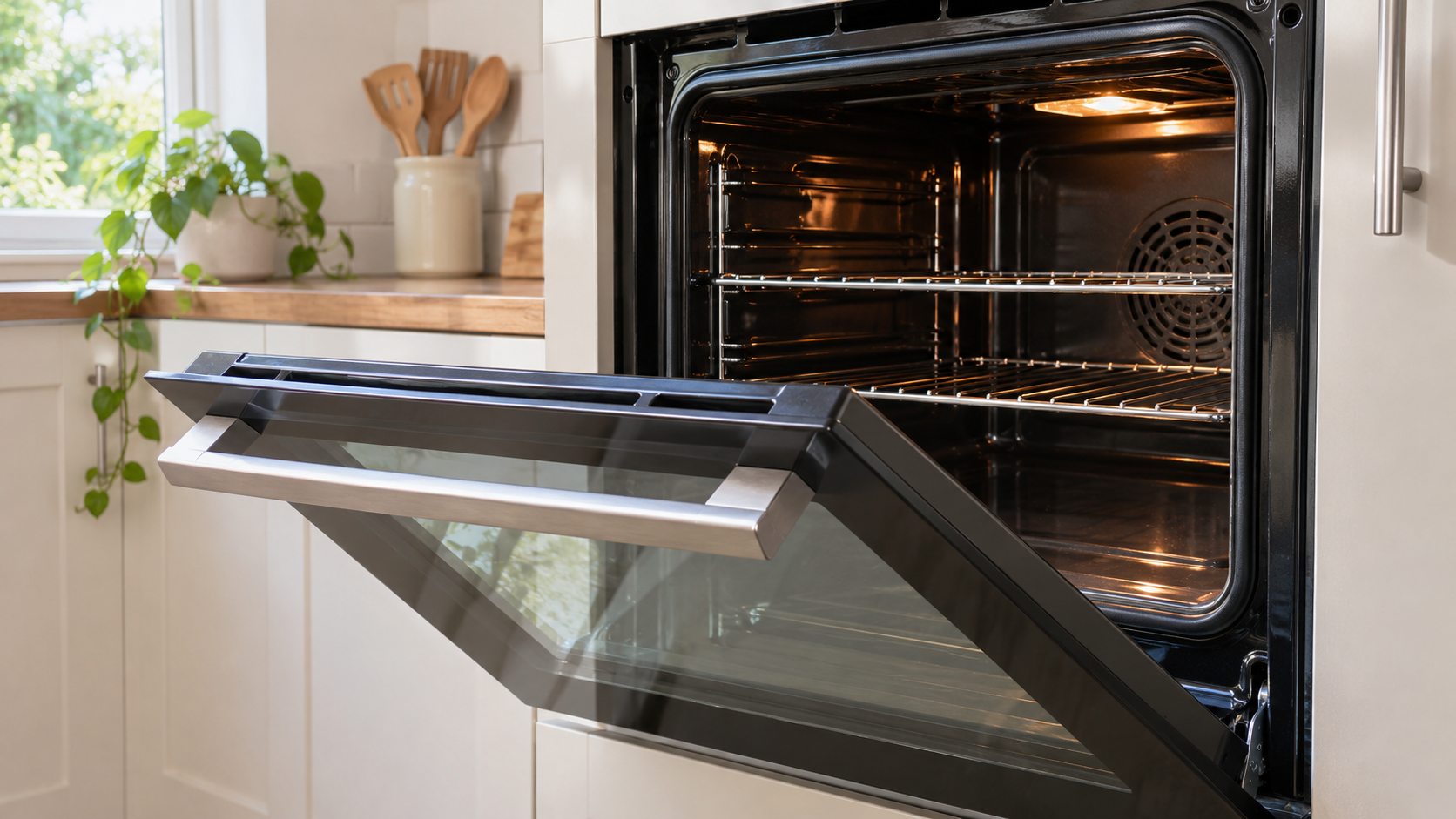
Look at the door in ordinary daylight with the oven off and cool. View it from the room side, then open the door and look at the oven-facing surface. Avoid pressing on the glass or trying to reach between panels. Move your viewpoint slightly: a mark on the outer pane may appear to shift against a mark on an inner pane. A photograph from each side can help you explain what you see to the cleaning team.
If the haze is plainly on an accessible surface, ask whether it could be remaining residue or a product film. If it seems trapped between panes, find out whether that part of the door was included and safely accessible during the visit. Some oven doors are designed to be opened for internal glass cleaning, but the method varies by model. The manufacturer’s manual should guide any removal; do not assume that a familiar-looking door has the same clips or hinges as another.
Watch whether moisture changes
Condensation may appear during or after cooking and then fade as the appliance cools or dries. AEG notes that moisture can form on oven door glass, including between panes on some built-in ovens. That observation is about moisture, not a promise that every cloudy patch will disappear. Note when the haze appears, how long it lasts and whether it follows cooking that releases much steam. Those details help distinguish a temporary effect from a fixed mark.
If water seems to persist, if the door does not close properly or if you are unsure whether the appliance is behaving normally, consult its manual or the manufacturer’s support. A cleaning appointment cannot establish the condition of seals, vents or door construction merely by wiping the pane. Keep the description factual: where the moisture is visible, when it appears and whether anything else has changed.
Consider residue on accessible glass
Grease splashes and repeated heating can leave a film on the inner face of the door. A suitable clean should address accessible deposits within the agreed scope. If a hazy area remains after the visit, show the cleaner the exact place rather than applying a strong cleaner immediately. Ask what was used and whether another pass is appropriate for your model. Some residues are easier to identify once the main grease has gone.
Follow the appliance maker’s care instructions for any routine cleaning you do yourself. Bosch, for example, advises checking the model manual before removing door glass and warns against using a glass scraper or glass cleaner in its oven-glass guidance. That is guidance for Bosch products, not a universal formula for every cooker. The useful principle is to match the method to the particular door and avoid improvising with sharp tools or unsuitable chemicals.
Recognise the limits of cleaning
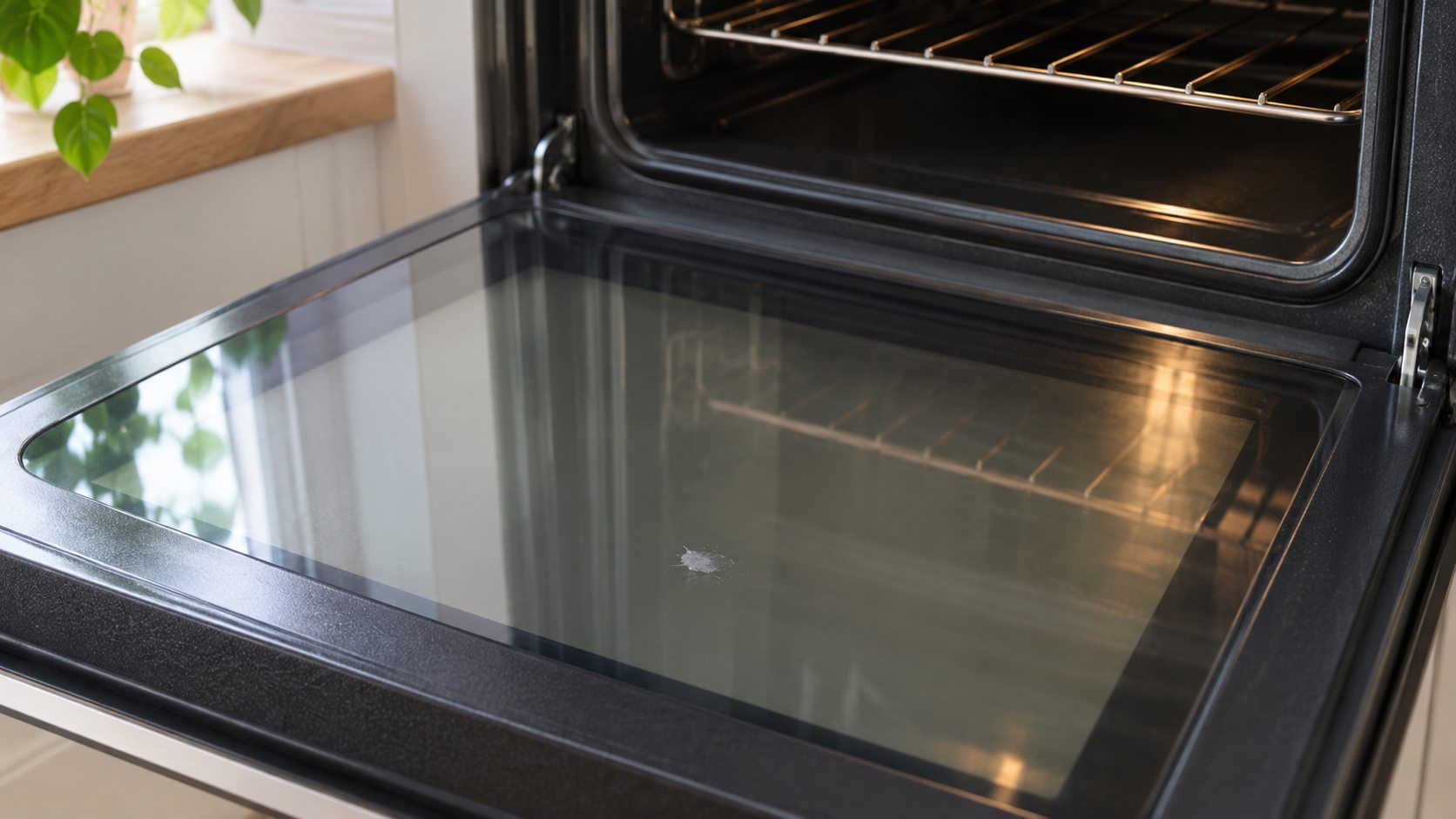
Not every pale mark is removable dirt. A scratched surface can scatter light, and an older pane may have a persistent change in appearance. A cleaner should be able to say what was attempted and what remained, although a visual inspection may not identify the exact cause. If the mark was present before the clean, compare photographs taken in similar light. A cleaner pane can make a pre-existing scratch more noticeable because surrounding grease no longer hides it.
Do not keep scrubbing one small patch in the hope that more pressure will solve it. If the surface has been damaged, repeated rubbing may make it worse. If the glass is cracked, chipped at an edge or insecure, stop treating it as a cosmetic issue and seek the manufacturer’s or a repair professional’s advice before using the appliance. Cleaning and repair are separate services with different aims.
Revisit the agreed scope
The booking matters when deciding whether the result met expectations. Did the quote include both sides of the accessible door glass? Was internal glass discussed, or did everyone mean only the surfaces that can be reached without dismantling? For a double oven, was the smaller door included? A short, specific record makes this easier to resolve than the phrase “clean the glass”, which different people may understand differently.
If a mark remains within an area that was agreed for cleaning, contact the team promptly. Share clear photographs and explain whether the haze is on the inside, outside or apparently between panes. Ask what access was possible and whether they recommend a follow-up. If a component could not be removed safely, that limit should be explained rather than hidden behind a general statement about results.
Photographs are useful when they show context as well as the mark. Take one image of the door and another closer view, without a harsh flash reflecting from the pane. Keep the camera angle similar to any photograph taken before cleaning. Note whether the oven was recently used and whether the mark looks different after the appliance has cooled. This record gives the team a clearer account than saying “still cloudy”.
Keep the next clean proportionate
For routine care, deal with fresh splashes once the appliance is cool, using the maker’s recommended method. Avoid allowing residue to build through many cooking cycles, but do not dismantle the door after every roast. Keep the manual available so anyone in the household knows which parts can be cleaned and how. If condensation appears, observe its pattern before deciding that the door needs another cleaning visit.
Professional Oven Care’s oven cleaning service includes discussion of accessible door glass when planning a visit in London. Describe the mark and the model when you ask for a quote. The question is not simply whether the glass looks perfectly clear. It is whether the agreed accessible surfaces are free of suitable deposits, whether any remaining haze is moisture or wear, and whether a separate appliance check would be more useful than another scrub.