
The kitchen care journal
When to book an oven clean before hosting
The day before a dinner party can disappear into shopping, chopping and finding enough room in the fridge. Adding an oven clean to that crowded list may seem efficient, but it leaves little space for a delayed appointment or a question about the cooker. A better plan starts with the first time you need the oven, then works backwards. The right interval depends on the appliance, the work agreed and the cleaner’s aftercare advice, so ask rather than relying on a universal timetable.
In this guide
Begin with the first cooking session
Leave room between the visit and the meal
Describe the menu only where it helps
Coordinate the rest of the kitchen
Keep food preparation separate
Begin with the first cooking session
Write down when the oven must be available, not simply when guests arrive. A slow roast, batch of bread or reheated dish may start hours earlier. If you plan to prepare food the previous evening, that evening is the real deadline for the clean. Include any use of the grill or second cavity; a double oven may be needed for more than one part of the menu.
Look at your cooking plan before calling. If the oven will be in constant use during the preceding days, choose a quieter window for the appointment. A clean is easier to arrange when the appliance can cool and the surrounding worktop is free. The team can advise on preparation and when normal cooking may resume after the specific service.
Leave room between the visit and the meal
Booking for the final morning gives little margin for travel delays, unexpected access problems or additional work found during inspection. Where your calendar allows, arrange the visit several days before the meal. That gives you time to review the result, put suitable parts back in their usual places and ask any follow-up question before the busy cooking begins.
Do not treat that gap as a promise that every oven needs the same waiting period. Ask the cleaner about the method used, any product instructions, drying and ventilation, and follow their aftercare. If a manufacturer gives model-specific directions, keep those available. The useful aim is to avoid scheduling the first oven use before you have the relevant guidance.
Popular weekends can fill early, especially when households are planning the celebration. Contact the team once the meal date is settled, even if you have not chosen every dish. Give a few possible appointment windows and say which one leaves the most space before cooking. If availability is limited, adjust the menu or cleaning scope. A rushed booking should not turn an agreed deep clean into a brief surface wipe.
Describe the menu only where it helps
The cleaner does not need your recipes, but the cooking pattern can explain priorities. If you need both oven cavities for a large meal, say so. If the grill is essential, include it in the scope rather than assuming a small upper compartment is covered. Mention heavily soiled racks or trays that you expect to use. These details help you agree what will be cleaned and what must be ready afterwards.
Tell the team the make and model if known, plus any self-cleaning liners or unusual finishes. A photograph of the front and one of the areas with heavy build-up may help. Avoid dismantling the door or using a strong product in a last-minute attempt to improve the appearance before the appointment. Clear information is more valuable than a hurried experiment.
Coordinate the rest of the kitchen
Hosting often means cleaning more than the oven. Decide whether the hob, extractor or nearby surfaces also need attention and ask which jobs belong to the same visit. A specialist oven clean is different from a general kitchen clean, even if both affect the cooking area. Agree the appliance scope, any add-ons and the full price before confirming the date.
If you are arranging professional oven cleaning in London, have your postcode and access details ready. Parking restrictions, stairs and a narrow route to the kitchen can change the practical plan. Tell the team if another contractor or a large grocery delivery is expected at the same time; a clear route and working area help everyone keep to the agreed appointment.
Keep food preparation separate
Do the involved clean before the main food preparation where possible. Keep ingredients and cookware away from the working area according to the team’s instructions. If the fridge will also be cleaned, arrange suitable chilled storage and check the appliance has returned to the required temperature before putting perishable food back. Do not use a neat-looking fridge as a substitute for a temperature check.
You can still prepare a menu while the kitchen is being cleaned, but avoid tasks that need the same worktop or oven. Use the appointment time for planning, shopping or setting the table elsewhere. This is mainly a question of space: a cleaner handling racks and trays needs a clear surface, while a cook needs room to manage food hygienically.
Check the result before the busy day
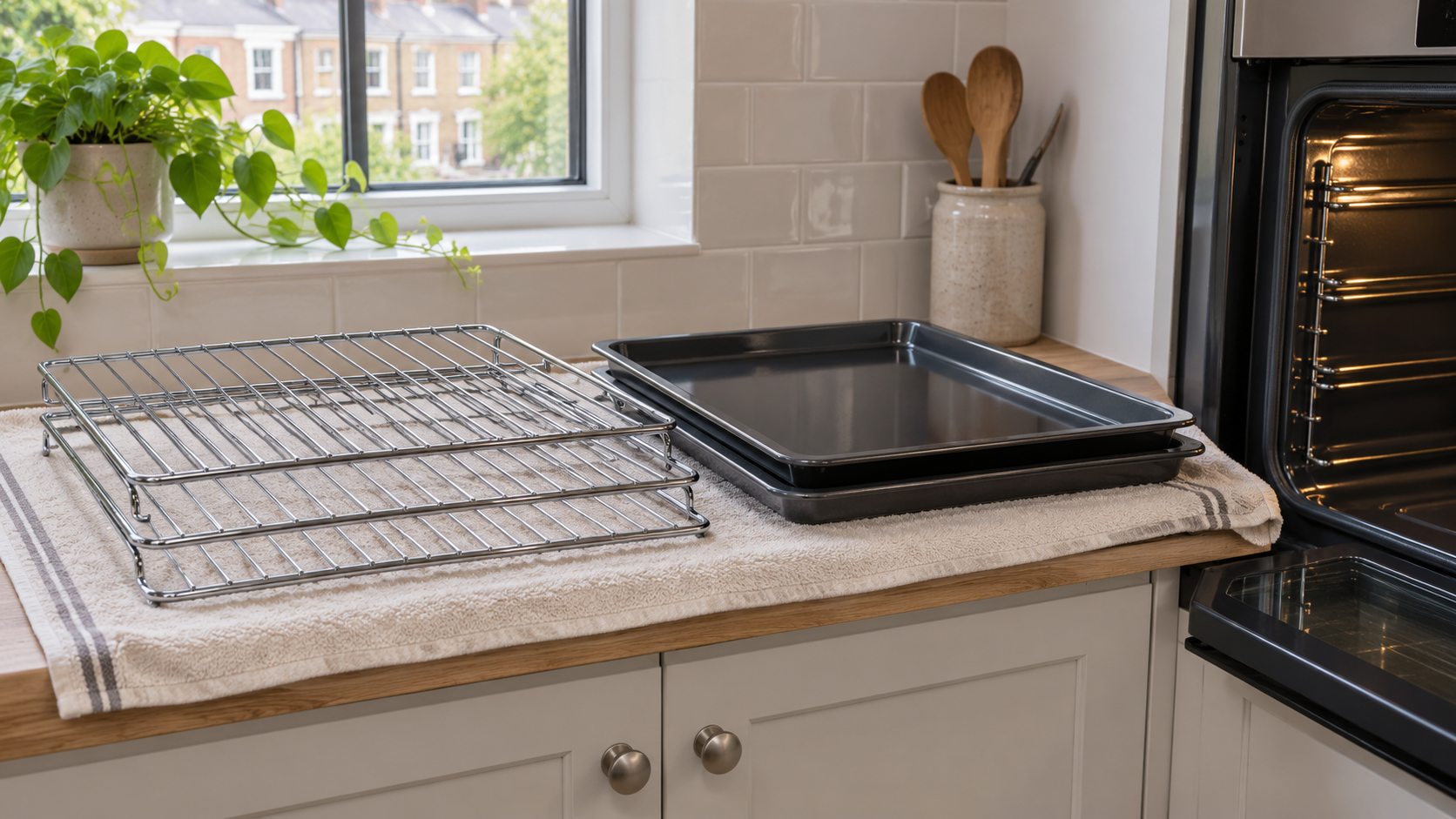
At the end of the visit, look at the parts included in the quote: cavities, accessible glass, racks and any agreed hob or extractor work. Ask about marks that remain. Burnt-on food may be removable, but worn enamel, scratches and permanent staining are different outcomes. It is easier to resolve a question while the visit is fresh than when a roast is already in the oven.
Check that suitable removable parts have been refitted as agreed and that you understand any aftercare. If a part seems damaged or the oven behaves unexpectedly, describe the issue and seek the right assessment rather than assuming another clean will solve it. Keep the appointment details and advice in one place so another member of the household can find them.
Have a modest backup plan
Even a careful timetable cannot guarantee every appliance will be available exactly as expected. Before shopping, consider which dishes can be prepared on the hob, served cold or made ahead if the oven needs assessment. The purpose is not to plan for disaster, only to keep one equipment problem from changing the entire gathering.
Choose a menu you can manage in your kitchen, book the clean with breathing room and confirm the first safe use with the team. When the busy day arrives, you should be dealing with the food and your guests, not wondering whether an inaccessible grill or unclear cleaning quote has left the cooking plan unfinished.