
The kitchen care journal
What an oven cleaning quote should include
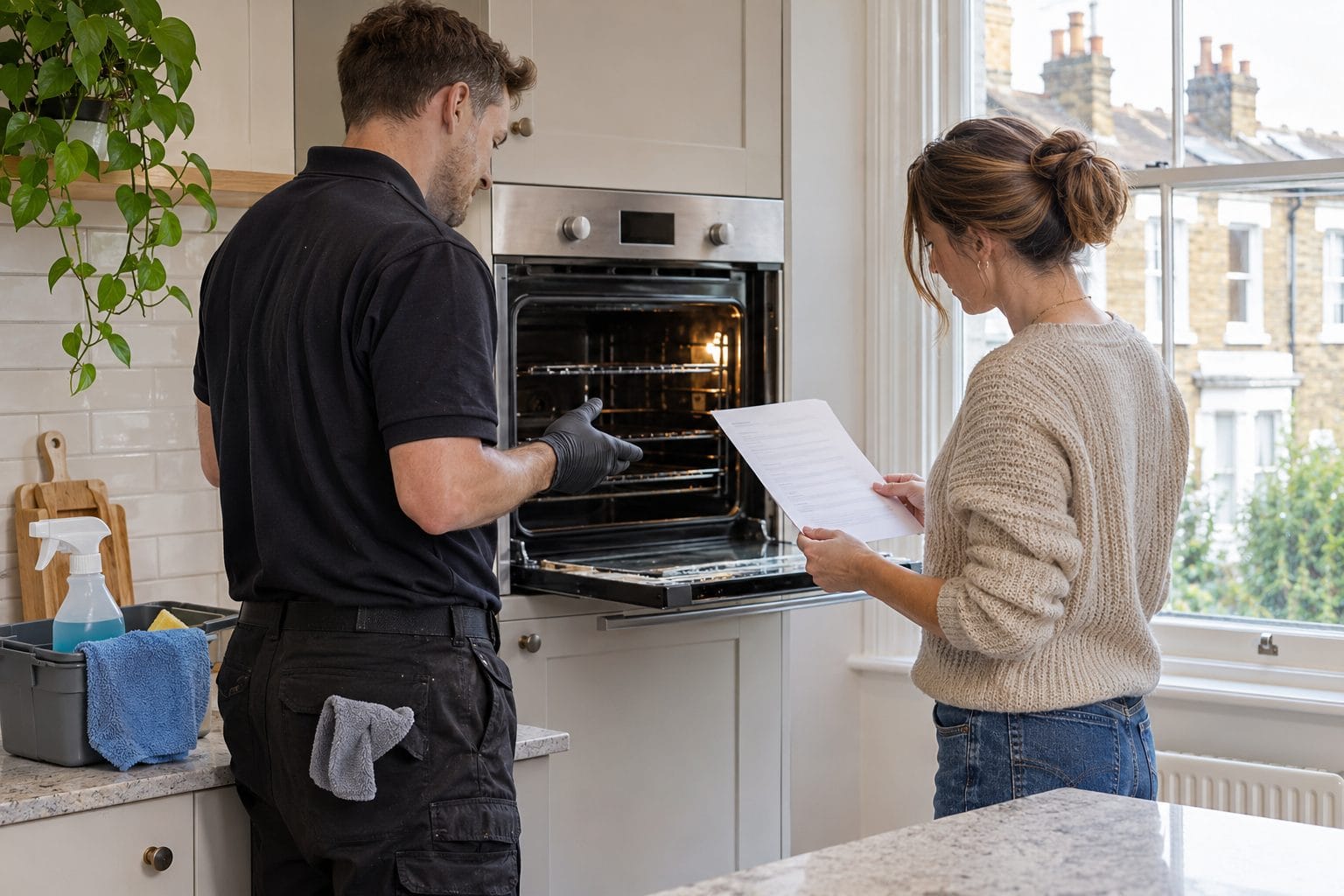
Two oven cleaning prices can look comparable until you ask what each one includes. One may cover a single built-in cavity and its racks; another may assume a larger cooker, a grill or an extractor. The clearest quote describes the appliance, the work and any extra charges in terms you can check. You do not need to know the technical name for every component. You do need enough detail to recognise what you are buying.
In this guide
Begin with the appliance itself
Decide whether the hob and extractor are included
Check the price around the visit
Begin with the appliance itself
Tell the company whether you have a single oven, a double oven, a freestanding cooker or a range. A double oven can have two usable cavities, or an oven and a smaller grill compartment. Range cookers vary even more. Give the make and model if you can find them, and explain how many cavities actually need cleaning. A photograph of the appliance front can help a team understand its layout, although a final assessment may still depend on seeing it.
Mention self-cleaning settings, catalytic liners, unusual coatings and any damaged area. These details can change what methods are suitable. Do not assume a lower price is better if the quote does not identify the appliance correctly. Ask the team to repeat back the type of cooker they have priced. If the description sounds wrong, correct it before accepting an appointment.
List the removable pieces
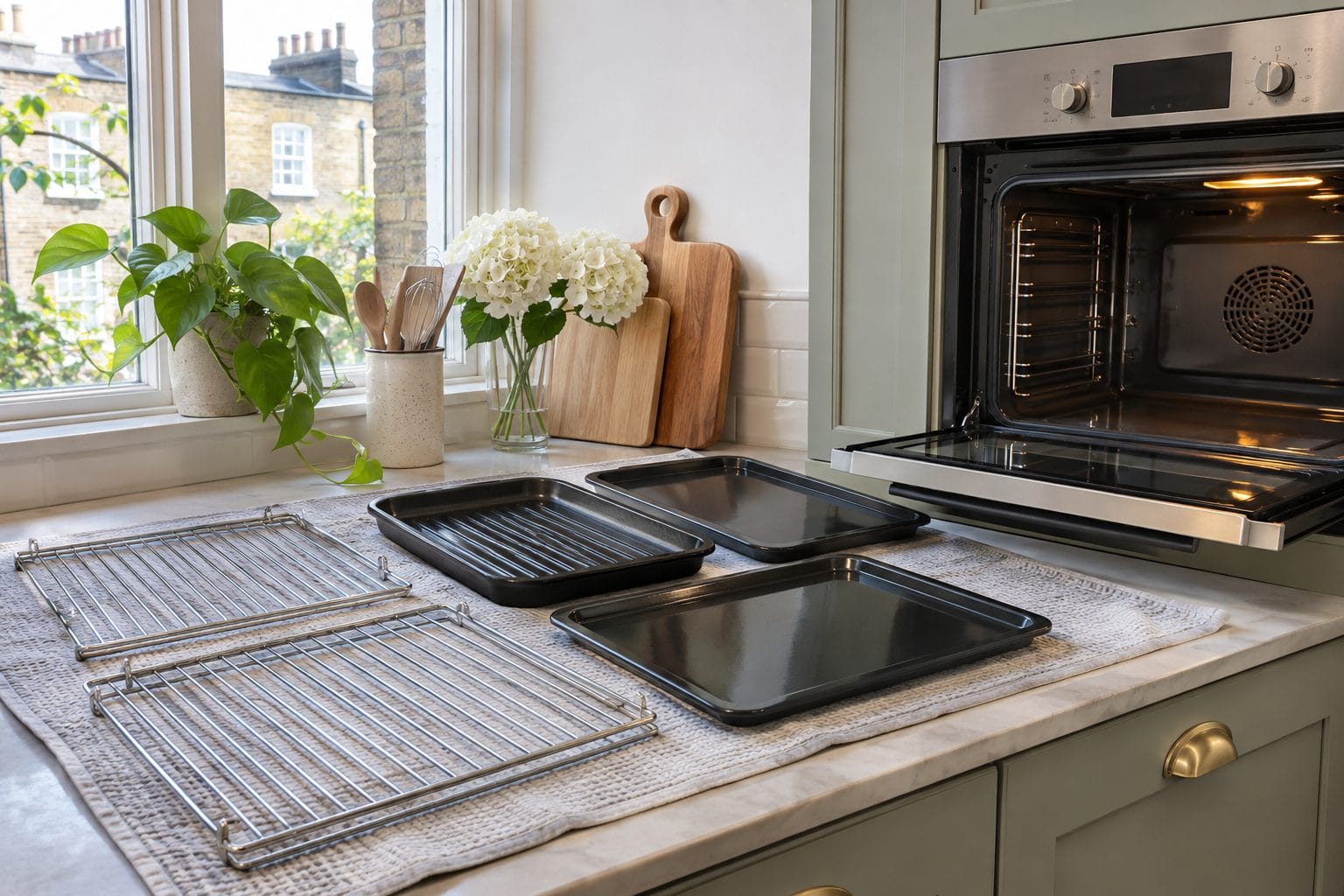
Racks, grill pans, trays and runners are not always treated the same way. Make a short inventory of the parts you expect to be cleaned. Separate items supplied with the cooker from unrelated baking tins and pans. Ask which parts the quoted price includes, and whether some cannot be treated because of their material or the manufacturer’s instructions. Non-stick coatings, for example, need care appropriate to their finish.
Door glass is another point worth discussing. A cleaner may be able to clean the accessible surfaces but may not be able to reach dirt trapped between panels on every model. Ask whether door removal or panel access is part of the proposed work, and what happens if the design prevents safe access. A sensible quote should describe a limit honestly rather than promise that every visible mark will vanish.
Decide whether the hob and extractor are included
An oven quote does not automatically include the whole cooking area. If you want a hob, extractor hood or filter cleaned, say so while requesting the price. Describe the hob type and the extractor’s visible condition. Grease on cabinets, splashbacks and walls may belong in a separate kitchen clean. Keeping these boundaries clear prevents an awkward conversation when the technician arrives with time allocated only for the oven.
For a broader job, compare the proposed oven work with the site’s deep kitchen cleaning service. Ask whether combining services makes practical sense for your kitchen, and request one written scope that names every appliance and surface. There is no need to add work merely to fill a package. Choose the tasks that address the condition you can actually see.
Check the price around the visit
The headline number is only useful when the complete amount is clear. Ask whether parking, a controlled parking zone, travel or a difficult access arrangement adds a charge. In London, a technician may need information about permits, loading restrictions, stairs or a building entrance before confirming the appointment. Give your full postcode and describe any obstacle that could affect arrival or equipment access.
Ask whether the quote includes VAT, if applicable, and whether a minimum call-out charge applies. Find out how payment is taken and when it is due. If a price is only a guide until the appliance is inspected, ask what could cause it to change. Agree that any additional work or cost will be discussed with you before it begins. Keep the written confirmation so the quoted scope is easy to revisit.
Ask what result is realistic
The condition of the cooker matters as much as its size. Repeatedly heated grease, worn enamel, etched glass and chipped coatings are different problems. A clean may remove deposits without restoring a damaged finish. Tell the team about marks that concern you and ask which are likely to remain. Photographs taken before the visit can help explain the question, but they cannot guarantee a result.
Also mention performance faults. An oven that heats unevenly, trips a circuit or has a damaged control needs a repair assessment, not a stronger cleaning product. The oven repair service is the relevant place to discuss that work. Keeping cleaning and repair as separate decisions helps you understand which company is responsible for each outcome.
Compare quotes on the same basis
When you have more than one price, put the details side by side. Check the appliance description, cavities, removable parts, glass, add-ons, access charges and exclusions. A cheaper number with a narrower scope may still suit you, but it should be a deliberate choice. Ask questions in ordinary language: “Will you clean the grill compartment?” and “Are both trays included?” are more useful than assuming a package name answers them.
If you are booking for a move or a specific event, confirm the date and likely visit duration. Avoid scheduling the job so tightly that there is no time to inspect it. Ask what to clear before arrival and whether the oven must be cool. Follow the company’s preparation guidance and the appliance manual; do not dismantle parts simply because you expect a cleaner to do so.
Keep the agreement easy to find
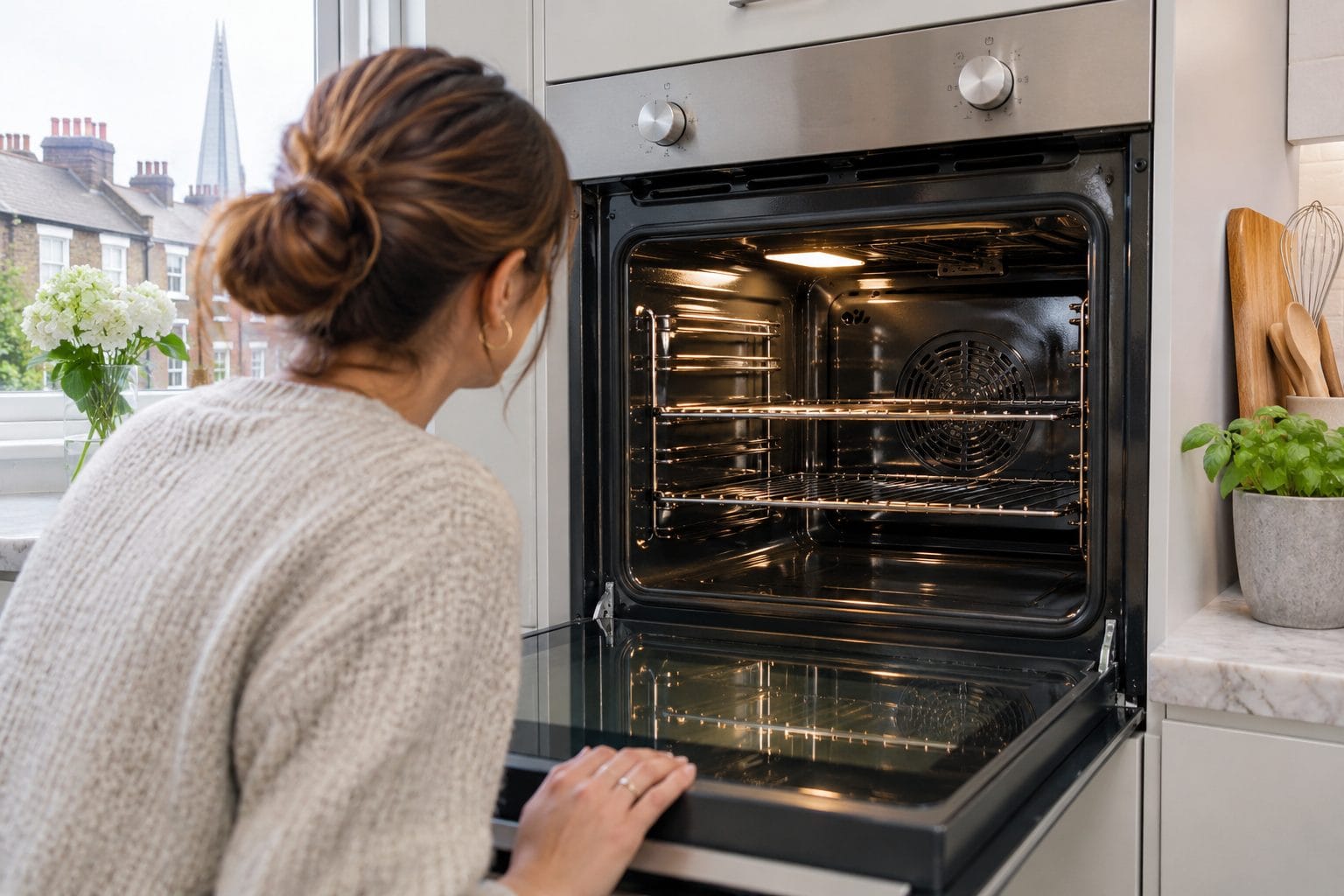
A useful written quote records the agreed tasks, complete price, appointment details and any condition-related limit. At the end of the visit, check the work against that description while access is easy. If a stain remains or a part was excluded, ask why. A clear answer may show that the result matches the agreed scope, or it may identify a point to resolve with the company.
The best quote is not the one with the longest list of promises. It is the one that lets you picture the work before anyone enters your kitchen. Describe the cooker accurately, ask what is included and keep the final price in writing. If anything is unclear, request a revised quote before paying a deposit or committing to the appointment. Then the appointment starts with a shared understanding of the job.