
The kitchen care journal
What to tell an oven cleaner about your range cooker
A range cooker can be the busiest appliance in the kitchen, yet its appearance tells only part of the story. Two cookers of the same width may have different numbers of cavities, different liners and different cleaning needs. When you contact a cleaning team, a short description of the appliance helps more than simply calling it “a range”. It also gives you a better chance of receiving a quote that reflects the actual work.
In this guide
Count the cavities you actually use
Describe the condition without downplaying it
Explain the hob and nearby surfaces
Start with the make and model
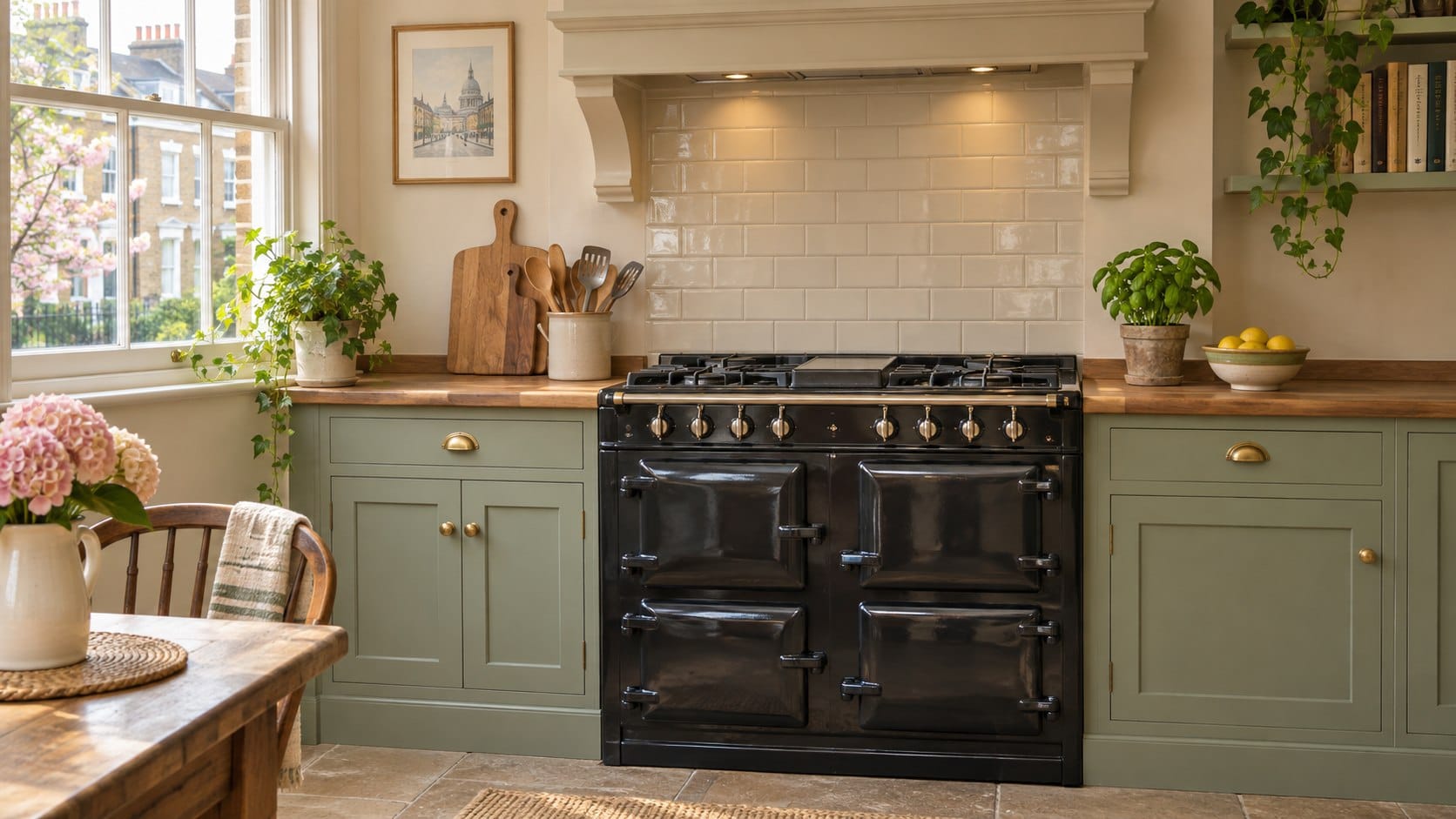
Look for the make and model number in the appliance paperwork or on the identification plate described in the manual. You do not need to remove panels or pull a heavy cooker away from the wall to find it. If the number is not readily accessible, give the make and describe what you can see. A photograph of the front, taken in good light, can show the arrangement of doors, controls and hob burners without guesswork.
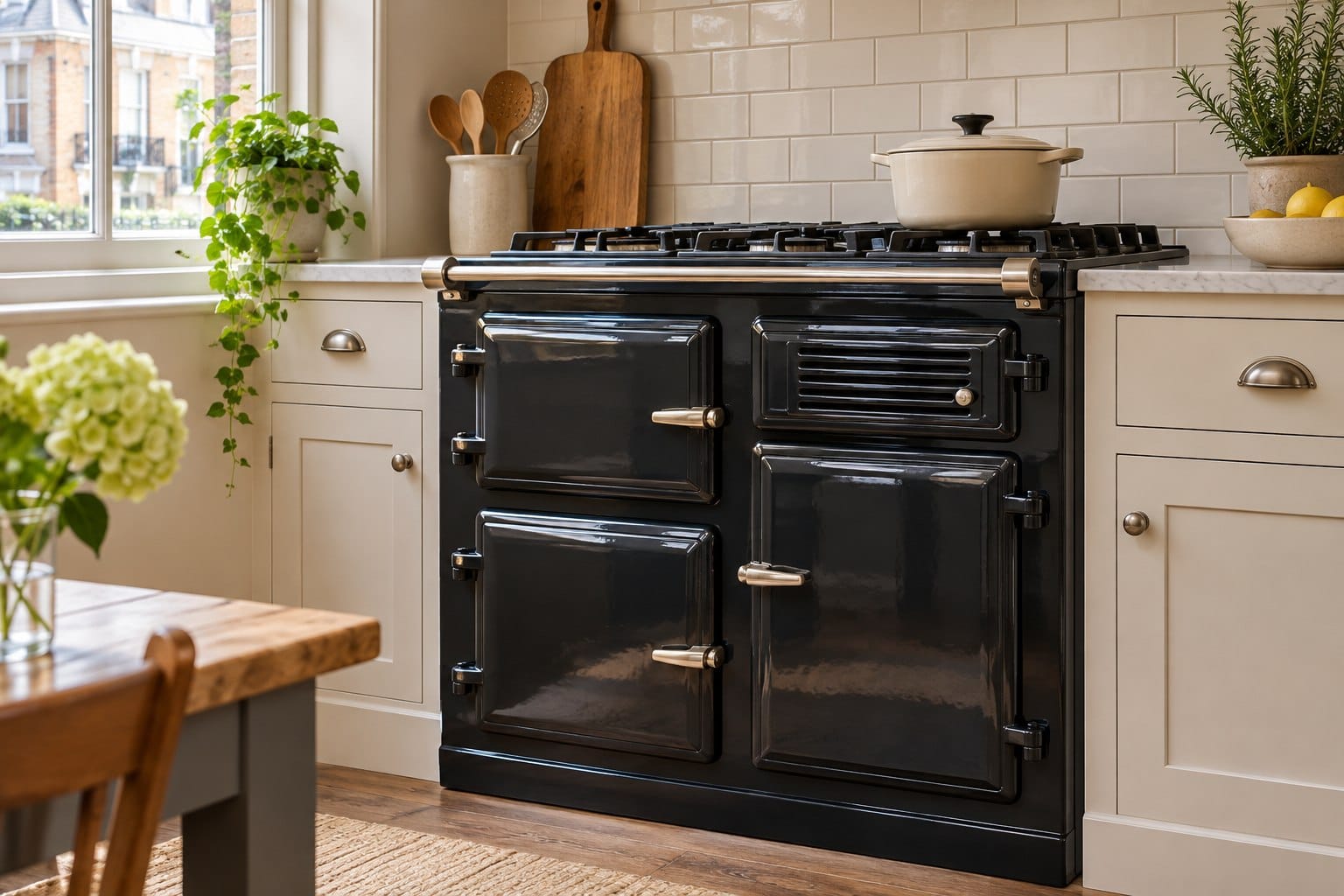
The model matters because “range cooker” describes a broad shape rather than a standard cleaning job. Some have two main ovens and a separate grill; others have several small compartments or a warming drawer. An Aga or Rayburn may need a different conversation from a conventional gas or electric range. Say what you know, and leave uncertain details for the team to check.
Count the cavities you actually use
Tell the cleaner how many oven cavities are present, including a small oven or grill that is easy to overlook. Explain which compartments are used every day and which are rarely switched on. A little-used cavity may still have old deposits, while the main roasting oven may need considerably more attention. This distinction helps the team estimate the time and decide what is included.
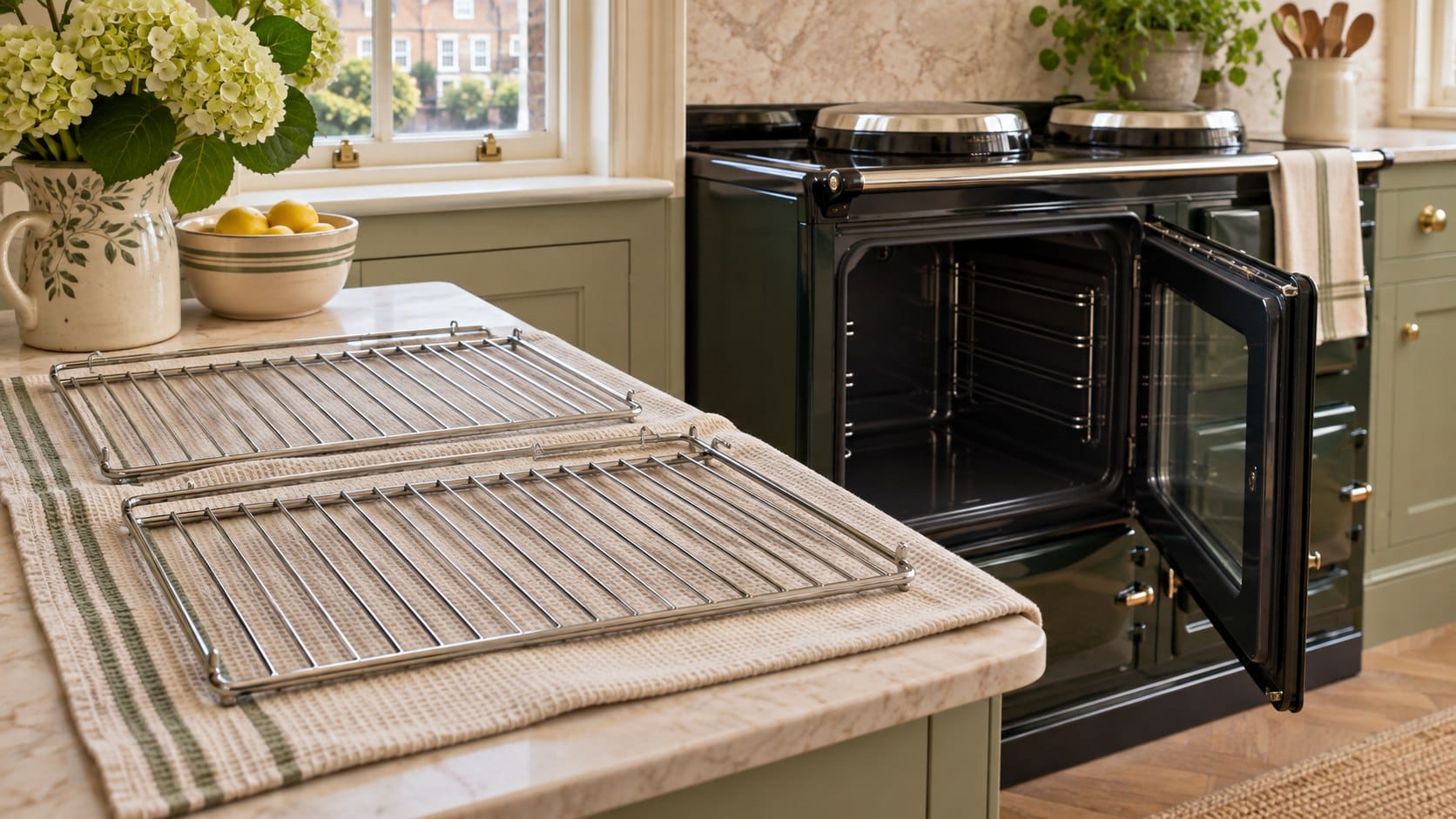
Open each door and note whether there are racks, trays, side rails or removable fittings. You are describing the job, not promising that every part can safely be removed. Some fittings need a method specific to the model. If the door glass has several panes or a visible gap between them, mention that too. Access to internal glass varies, and a quote should not assume that all panes can be cleaned.
Describe the condition without downplaying it
You do not need to diagnose every stain. Explain where the build-up is heaviest: perhaps the oven floor after roasting, the grill ceiling, the racks or the door edges. Note burnt-on spills, grease around controls and any cloudy glass. A few clear photographs are often more useful than an elaborate description. Include one overall view and close-ups of areas that concern you.
Be equally clear about marks that may not be ordinary dirt. Chipped enamel, a scratched hob, worn seals or discoloured trim should be mentioned before work begins. Cleaning can remove suitable deposits; it cannot restore a damaged finish. Recording the condition at the start helps both sides agree on realistic results, especially when an older cooker has been used heavily for years.
Explain the hob and nearby surfaces
A wide cooker may have gas burners, an induction surface, a ceramic hob, a griddle or more than one of these. Tell the team which arrangement you have and whether you want the hob included. Ask specifically about pan supports, burner caps, removable rings and the area around controls. They may be priced or treated differently from the oven cavities.
If an extractor above the cooker also needs attention, mention it as an additional appliance. Greasy filters and the visible outer housing are not automatically part of an oven clean. It is easier to agree a combined visit when the team knows about the extra work at the quoting stage. The same principle applies to a splashback or surrounding kitchen surfaces: name them rather than assuming they fall within the cooker price.
Check the material and care guidance
Range cookers can combine enamel, stainless steel, cast iron, glass and coated components. The same cleaner or tool will not suit every surface. If you have the manual, check its cleaning section and tell the team about any special instructions. Mention catalytic or self-cleaning liners, specialist finishes and parts that the manufacturer says should stay in place. If the cooker has previously been treated with a strong product, share that information as well.
Do not try an aggressive product immediately before the appointment to make the job look easier. Fresh chemical residue can complicate the assessment, while damage to a coating cannot be scrubbed away. A straightforward account of what has been used is more helpful than a last-minute experiment. If you are unsure whether a mark is residue or wear, ask the team to assess it.
Make the visit practical
The cooker itself is only one part of the booking. Give your full postcode and explain access to the property, including stairs, a narrow entrance or a controlled parking area. In London, parking restrictions can affect the visit and its total price. Ask whether any parking or travel charge is included in the quote. If the kitchen has limited working space, say so, particularly if the cooker sits between fitted units.
Plan to clear loose items from the hob and nearby worktop before the cleaner arrives. The team can then discuss where suitable removable parts will be handled and how the surrounding area will be protected. You do not need to dismantle the appliance yourself. If a component seems stuck or damaged, leave it in place and point it out on arrival.
Agree the scope before confirming
Before you book, ask for the complete price and a plain description of what it covers. Confirm the number of cavities, the hob or extractor add-ons, accessible door glass and suitable removable parts. Ask what happens if the condition differs substantially from the photographs. A clear answer is more useful than a starting price with unclear boundaries.
For a London visit, Professional Oven Care’s oven cleaning service provides a starting point for discussing single, double and specialist cookers. Have the model, photographs, postcode and list of requested areas ready when you call. Those few details turn a vague enquiry into a workable plan. They also make it easier to recognise, at the end of the appointment, whether the agreed parts of your cooker received the attention you expected. Keep notes so every part of the quote stays clear.