
The kitchen care journal
Cooking smells, burnt residue and when cleaning is not the answer
An oven can smell because food has spilled and been reheated. But not every unusual smell is a cleaning problem. Start by considering when it happens and whether the appliance is operating normally, rather than trying to cover it with a fragrance.
In this guide
Notice the timing and the appliance’s behaviour
Check for accessible food residue once cool
Consider the rest of the cooking area
Notice the timing and the appliance’s behaviour
Is the smell associated with a visible spill, a particular dish or ordinary heating? Has the oven’s performance changed? A clear account is useful if you need advice.
If a smell is unexpected or the appliance appears unsafe, stop using it and seek appropriate help. Suspected gas or electrical problems are not a reason to run another cleaning cycle or experiment with products.
Check for accessible food residue once cool
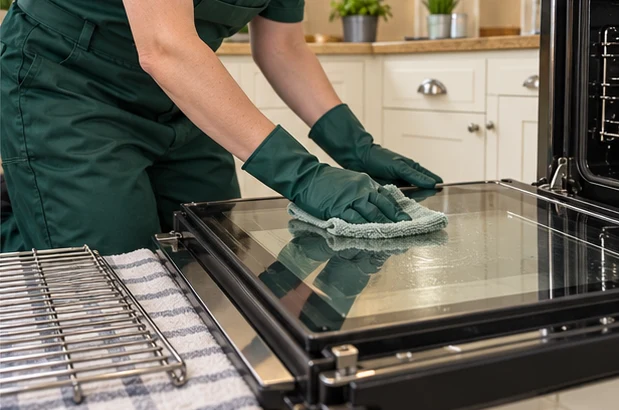
Allow the oven to cool, then follow its care guidance. Look at the floor, trays and racks for food deposits. Remove only what the manufacturer’s method and safe access permit.
Do not pour liquid into vents or controls or remove internal panels to investigate a smell. A household surface clean has limits, and the model determines what can be dismantled safely.
Consider the rest of the cooking area
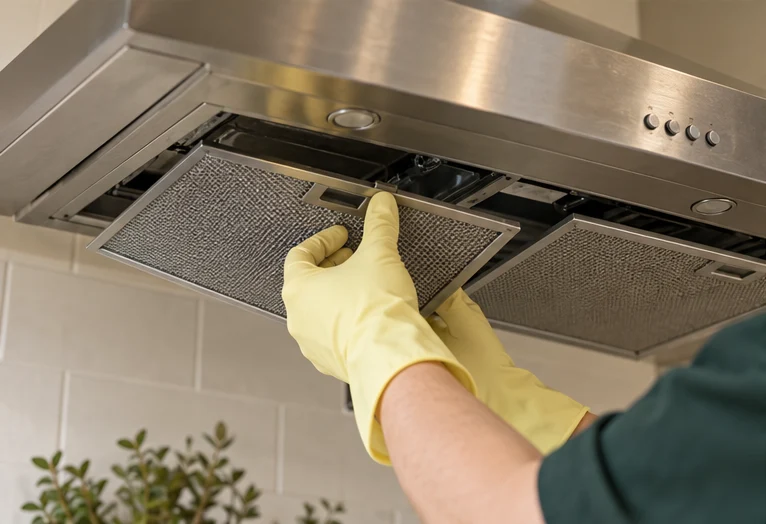
Grease can collect around the hob and extractor as well as inside the oven. Follow the extractor manual for filter cleaning or replacement; not every filter is washable.
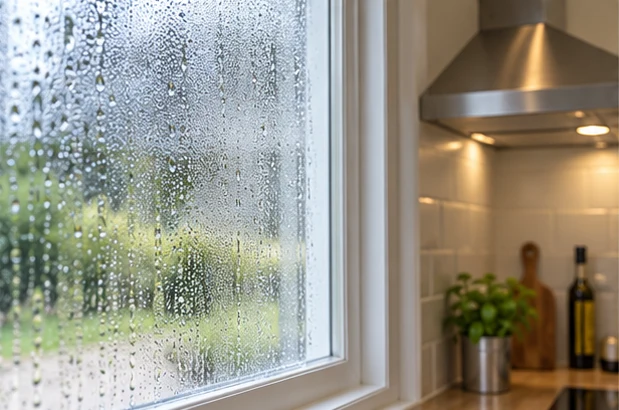
Kitchen ventilation and cleaning are related but separate. Persistent condensation or damp needs attention to the source, not simply more perfume or another wipe of the cooker.
Be honest about the finish and the cause
A specialist clean can remove suitable grease and burnt-on food. It cannot promise to cure every smell, repair a faulty component or reach every inaccessible space in every model.
Explain previous products and any unusual behaviour before booking. Ask what will be included and whether the enquiry should be handled as a repair or assessment instead.
Worth keeping in mind
Do not mask a warning sign
A fragrance does not identify the cause of an unusual smell. If the appliance seems unsafe or the smell persists unexpectedly, stop using it and arrange appropriate advice.
Keep residue from becoming the next cooking session
Once a spill can safely be treated, use the approved method before it is reheated repeatedly. Check accessories as well as the cavity. Keep a note of any problem that continues after ordinary care.
For a professional visit, give the model, cavity count and condition, and discuss any hob or extractor add-ons. Confirm the complete quote and aftercare instructions in advance.
When professional help is useful